

If you’re searching for local tree trimming services near you, Tree Solutions LLC provides reliable, professional tree care across Macomb and Oakland Counties. Our licensed arborists offer expert tree trimming, pruning, and tree removal services, helping homeowners maintain safe, healthy trees

Tree trimming is the process of removing dead, overgrown, or structurally weak branches to improve a tree’s health, safety, and appearance. Regular professional tree trimming helps prevent falling limbs, reduces storm damage risk, promotes healthy growth, and keeps trees safely clear of homes, and driveways
7 reasons why tree trimming is important for healthy and safe trees:
Regular tree trimming services help prevent safety hazards, improve tree health, and maintain strong structure. If trees show signs of overgrowth, damage, or instability, professional trimming helps restore balance and prevent future storm damage.

Dead limbs can fall unexpectedly and should be removed through professional tree trimming services.

Excessive growth creates structural imbalance and increases the risk of storm damage or branch failure.

Trees growing near structures require clearance trimming to prevent property damage and utility hazards.

Overcrowded branches block sunlight and airflow, weakening trees and increasing disease risk.

After storms, damaged branches should be trimmed to prevent further tree stress and help with compartmentalization..

Branches rubbing against each other create wounds that weaken the tree’s structure.

Trees naturally grow in ways that can create safety risks or structural problems over time. Recognizing the early signs that a tree needs professional tree trimming services helps prevent falling branches, storm damage, and long-term tree health issues.

EXCELLENT Based on 128 reviews
 Posted on Google
 GabrielleI couldn’t be more pleased with the service I received! From start to finish, Tree Solutions was highly professional, prompt, and extremely communicative. They made the entire process easy and stress-free, kept me informed every step of the way, and showed up ready to get the job done. The crew worked quickly and efficiently while still taking the time to do everything safely and properly. The quality of their work was excellent, and they did a great job cleaning up the debris afterward. I would absolutely recommend this company to anyone in need of tree removal, trimming, or debris removal. I will definitely be calling them again for future work. Five stars from me!Posted on Google
 Lauren BWe just moved to the area, and the team could not have been better. The owner was so nice and really knowledgeable. We had to remove 5 trees in total (including the stump grinding) as well as trim another one. He helped us come up with a game plan and they got everything done in a day. They were neat workers too. They had to remove a section of our fence to get to the backyard and they did so and put everything back together as if they never touched it. Great prices too. I would recommend them to anyone.Posted on Google
 George de la NuezChris, Sara and the entire Tree Solutions team are a class act. They were punctual, professional and personable. Their equipment is top-notch, clean and well maintained. They did a great job at my home trimming one tree and removing another after which they picked up and left everything looking great. They came highly recommended and I see why. I have already contracted them to do work at my business. A company this good is hard to find, look no further. George de la Nuez Owner Operator Wolverine Harley-DavidsonPosted on Google
 Anthony ReadThe highest level of tree professionalsPosted on Google
 Rick HarrisCris and his team provided great service. Overall really good value. The team showed up on time and completed a large job in one day. Cris stands by his work and sent the team back out to provide additional stump grinding to ensure the job was done right.Posted on Google
 Richard LoedingI called them. They came out the same day later in the day two guys volunteered. They brought the perfect truck which looked brand new, but they said it was five years old maneuvered it and worked out with my two neighbors whose yard they needed to back the truck into took down the branches as directed by my neighbor, whose house was threatened by the branches from my tree, he was very happy the other neighbor we paid off with a pizza so he was happy since his yard partially had the truck braces on it. They then flattened out any marks they’ve made cleaned up and we’re out of there all based on the price they quoted me which I thought was fair my neighbor thought it a little high, but given what they did on short notice where I knew there was time and a half involved I was impressed.Posted on Google
 dan trainorThey did a great job removing a tree from my yard, and cleaned up well.Posted on Google
 Cindy MartinExcellent, thorough, and safety conscious tree removal. This company stood out from the other estimates we got – they were the only one who told us they would call Miss Dig ( utility locating) before starting work, which showed they actually took safety and site prep seriously rather than just rushing to the job. They were competitively priced and able to do the job quickly. They sent out a certified arborist to evaluate the trees beforehand, which gave us confidence the removal plan was sound and not just a quick cut and haul. The crew was professional, efficient, and left the yard clean afterward. Highly recommend if you want a company that does things the right way, not just the fast way.Posted on Google
 Rob WingThese guys are great! Best prices, courteous team and a job well done. Our huge maple tree was done and cleaned up in 2 hours.

Selective removal of branches to improve sunlight penetration and airflow, helping trees grow healthier and stronger.
Safe removal of dead, diseased, or damaged limbs to prevent falling branches and improve tree safety.

Trimming weak or competing branches to develop strong tree structure and balanced growth.

Cutting branches away from roofs, driveways, and sidewalks, to prevent property damage.

Removing weak or overextended limbs to reduce the risk of storm-related branch failure.
Professional trimming that improves the appearance, balance, and long-term health of trees.
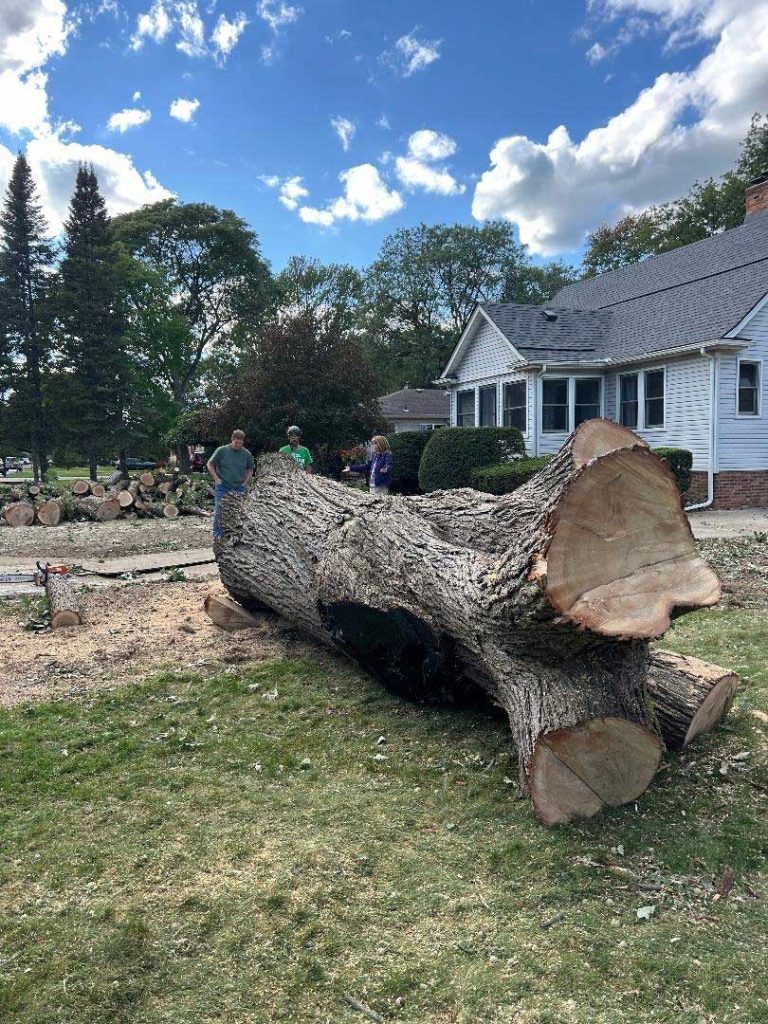
You should start thinking about tree trimming when you notice overgrowth, dead branches, or changes in the tree’s shape or health that could affect safety or growth. Signs like branches hanging over roofs, touching power lines, blocking sunlight, or growing unevenly are clear indicators that trimming is needed.It’s also important to act when you see dead, weak, or crossing branches, as these can break unexpectedly, especially during storms. Trees that haven’t been maintained for a long time or show early signs of disease may also need trimming to prevent further decline. If left unaddressed, these issues can turn into safety hazards or lead to more serious problems that require removal instead of simple trimming.
You can tell a tree needs trimming when there are visible signs of overgrowth, imbalance, or weak branches that affect its safety or health. Common indicators include branches hanging over roofs, touching power lines, blocking walkways, or growing unevenly and making the tree look unbalanced.
Other signs include dead, cracked, or crossing branches, dense canopies that limit airflow, or limbs that drop frequently during wind or storms. Trees that haven’t been maintained in a while may also need trimming to restore proper structure and growth.
Addressing these early helps prevent larger issues, if ignored, overgrowth and weak limbs can turn into hazards or lead to more costly removal later.
The difference between tree trimming and tree pruning comes down to the purpose of the work.
Tree trimming is mainly done for appearance and control, it involves cutting back overgrown branches to shape the tree, improve its look, and keep it clear of structures like roofs, driveways, or power lines.
Tree pruning, on the other hand, is focused on tree health and safety. It involves removing dead, damaged, or diseased branches to prevent decay, improve structure, and encourage healthy growth.
In many cases, both are used together, trimming for maintenance and pruning for health, but the goal behind each is what sets them apart.
Trees should typically be professionally trimmed every 1 to 3 years, depending on the tree’s type, age, and growth rate. Fast-growing trees may need more frequent trimming, while mature, slow-growing trees can go longer between services.
Factors like location, weather exposure, and overall tree health also play a role. Trees near homes, driveways, or power lines may require more regular maintenance to keep them safe and controlled.
Trimming isn’t just about being on a schedule, if you notice dead branches, overgrowth, or changes in structure, it’s best to address it sooner rather than waiting for the next cycle.
You’ll know your trees need professional trimming when there are clear signs of overgrowth, structural issues, or potential safety risks that go beyond basic maintenance. This includes branches hanging over your roof, touching power lines, blocking driveways, or making the tree look uneven or top-heavy.
Other indicators include dead, cracked, or crossing branches, dense canopies that limit airflow, or limbs that fall during wind or storms. Trees that haven’t been trimmed in years or are showing early signs of disease may also require professional attention to prevent further decline.
If the tree is near your home or high-traffic areas, even minor issues can become serious quickly, making professional trimming the safer and more effective option.
Yes, tree trimming can help prevent storm damage by reducing weak points that are most likely to fail under high winds or heavy rain. Removing dead, damaged, or overextended branches lowers the chances of limbs breaking and falling during a storm.
Trimming also improves the tree’s structure and airflow through the canopy, which helps it withstand strong winds more effectively instead of acting like a dense, heavy sail. Proper weight distribution reduces stress on major limbs and the trunk.
While trimming can’t eliminate all risk, it significantly reduces the likelihood of damage, especially for trees located near homes, driveways, or power lines.
Yes, tree trimming is necessary for healthy growth and long-term stability when done correctly. It helps remove dead, damaged, or diseased branches, which allows the tree to focus its energy on strong, healthy growth.
Trimming also improves airflow and sunlight penetration through the canopy, reducing the risk of disease and promoting more balanced development. By shaping the tree early and maintaining it over time, you prevent weak structures and overcrowding.
Regular trimming not only supports growth but also reduces safety risks, helping the tree stay both healthy and structurally sound as it matures.
If trees are not trimmed regularly, they can become overgrown, unbalanced, and more prone to damage or disease over time. Excess growth can lead to weak, overcrowded branches, reducing airflow and sunlight, which increases the risk of decay, pests, and poor overall health.
Untrimmed trees are also more likely to develop dead or unstable limbs that can break unexpectedly, especially during storms. Branches may begin to hang over roofs, driveways, or power lines, creating safety hazards.
Over time, neglect can turn a manageable trimming job into a larger, more expensive issue, sometimes even requiring full tree removal if the structure becomes too compromised.