
ISA Certified Arborist logo
ISA Michigan Logo
NCCER logo featuring stylized building silhouettes and a curved roadway inside blue and gray geometric shapes, representing the National Center for Construction Education and Research.
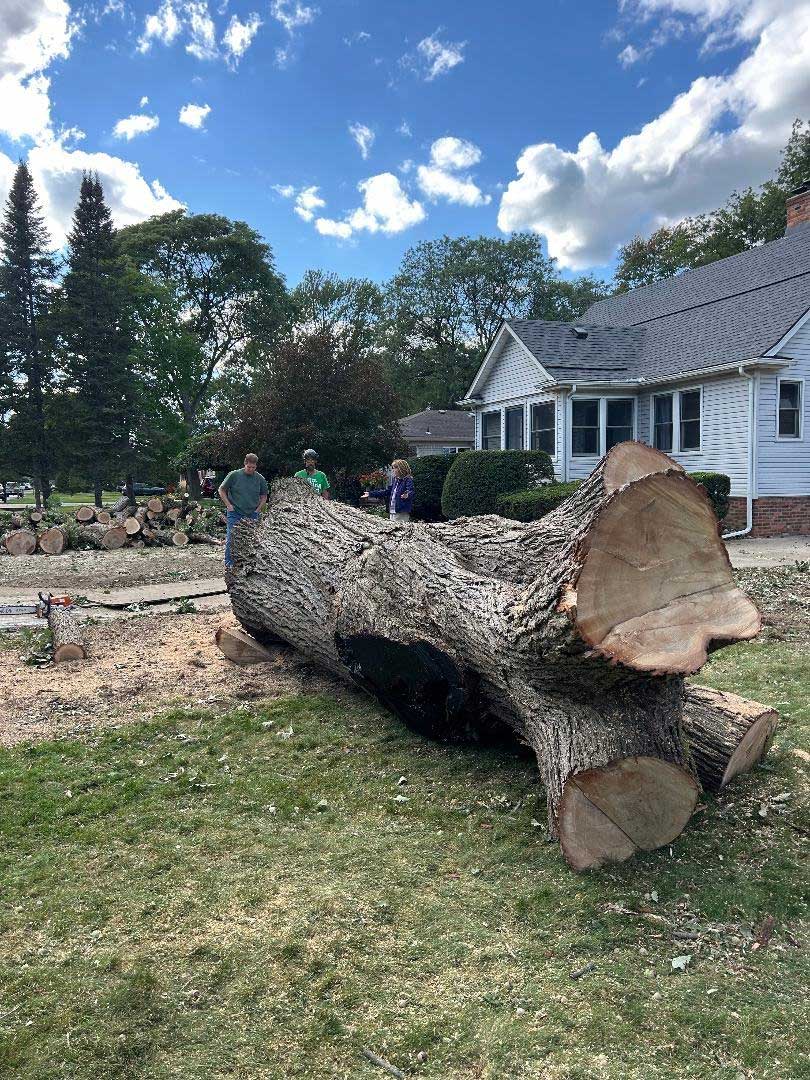
Large freshly cut tree trunk lying in a residential front yard after professional tree removal, with a house, workers, and wood debris visible during the tree removal process.

Trusted Hazardous Tree Removal Services in Macomb and Oakland Counties

When a hazardous or dangerous tree threatens your home, driveway, or other structures , fast professional removal is critical. Tree Solutions LLC provides hazardous tree removal services across Macomb and Oakland Counties, safely handling storm-damaged, leaning, decaying, or structurally unstable trees before they cause property damage or injury.

Professional crane-assisted tree removal with a certified arborist safely dismantling a large tree in a residential backyard, featuring expert tree cutting, hazardous tree removal, and precision rigging services.

What Is a Hazardous Tree?

A hazardous tree is a tree with structural defects, disease, decay, or root damage that makes it unstable and capable of falling and damaging people, homes, vehicles, and other structures.

Common signs of a hazardous tree include:

Trees with severe decay, compromised roots, or a noticeable lean are most likely to fall, especially during storms or strong winds. Not all hazards are obvious, which is why a professional evaluation done by an ISA Certified Arborist is important. They are able to identify both visible and underlying issues that may not be apparent to the untrained eye.

When Should a Tree Be Taken Down? When Hazardous Tree Removal Is Recommended

A tree should be removed when it shows structural instability, severe decay, uprooting roots, or poses a risk to nearby homes, vehicles, and other structures..

Common signs a tree needs to be taken down include:

Tree Removal vector Icon

Uprooting roots or lifting soil around the base of the tree

Tree vector Icon

Hollow or rotting trunks, fungal growth, or peeling bark

Tree Vector

Leaning trees that have shifted after storms or heavy rain

Tree Vector

Trees with extensive disease, decay, or structural damage

Certified tree care and eco-friendly arborist services icon for sustainable landscaping.

Trees growing too close to a house with large overhanging limbs

24/7 Emergency calling vector Icon

Large dead or hanging branches in the canopy

Trees showing these warning signs are often most likely to fall, especially during storms or strong winds. In some areas, local permits may be required before cutting down large or protected trees.Having an ISA Certified Arborist assess your trees provides peace of mind and ensures informed decision-making. In many cases, corrective pruning or maintenance can mitigate risk and preserve the tree. When removal is necessary, it is recommended based on safety, not guesswork.
Professional tree removal service using a crane to safely dismantle a large damaged tree in a residential neighborhood, with aerial branch removal, storm damage cleanup, and expert arborist tree cutting operations.

Signs It’s Time to Call Tree Solutions LLC for Hazardous Tree Removal in Michigan

If you notice any of these warning signs, it’s time to contact Tree Solutions LLC for hazardous tree removal services in Michigan. Call the 24/7 emergency tree removal contact below for fast, professional assistance before the situation becomes dangerous.

Inverted comma Icon

testimonials

What Does Hazardous Tree Removal Services Include?

Hazardous trees require careful planning, specialized equipment, and experienced arborists. Tree Solutions LLC delivers comprehensive hazardous tree removal services in Macomb and Oakland Counties, including , emergency response, crane-assisted removal, , and professional tree care to protect homes and businesses

What to Expect From Hazardous Tree Removal

Professional tree health assessment icon featuring a clipboard, magnifying glass, and pruning shears, representing certified arborist inspections, tree care services, plant health evaluations, and tree maintenance.

On-Site Assessment

We carefully inspect your property to identify hazardous or unstable trees. Our experts will explain the risks verbally and recommend the safest removal plan.

Professional arborist icon wearing safety gear and holding a clock beside a traffic cone, representing reliable tree services, on-time scheduling, certified tree care, and safe job site management.

Safe Removal

The crew secures the area using professional safety gear, clearing hazards and protecting nearby structures before starting emergency tree removal.

deforestation

Emergency Response

Using specialized equipment, arborists perform controlled cutting techniques such as felling, sectional cutting, or crane-assisted removal for hazardous trees.

Simple line icon of a house surrounded by trees and landscaping, representing home, residential property, real estate, gardening, outdoor living, and eco-friendly housing.

Debris / Wood Hauling

Branches, logs, and storm debris are safely cleared to restore access and eliminate hazards after completion of emergency tree removal services.
Illustration of a syringe injecting into a tree, symbolizing tree injection treatment for pest control, disease management, and arboricultural tree health care.

Crane Tree Removal

Safe crane-assisted tree removal services for large, hazardous, or hard-to-reach trees near homes, other structures, , and tight spaces.

Certified tree care and eco-friendly arborist services icon for sustainable landscaping.

Licensed & Certified Arborists

Our ISA-certified arborists provide professional tree care, safe removals, and expert evaluations for hazardous or storm-damaged trees.
Tree stump with exposed roots line icon, minimalist tree stump outline illustration for landscaping, tree removal, forestry, and arborist services.

Tree Removal and Cutting

Professional tree removal and cutting services for dead, diseased, storm-damaged, or hazardous trees threatening homes and property.

Tree on a grassy hill line icon with sparkles, representing healthy trees, professional tree care, landscaping, arborist, and outdoor maintenance services.

Tree Trimming and Pruning

Expert tree trimming and pruning services to remove weak branches, improve tree health, and reduce future storm damage risks.
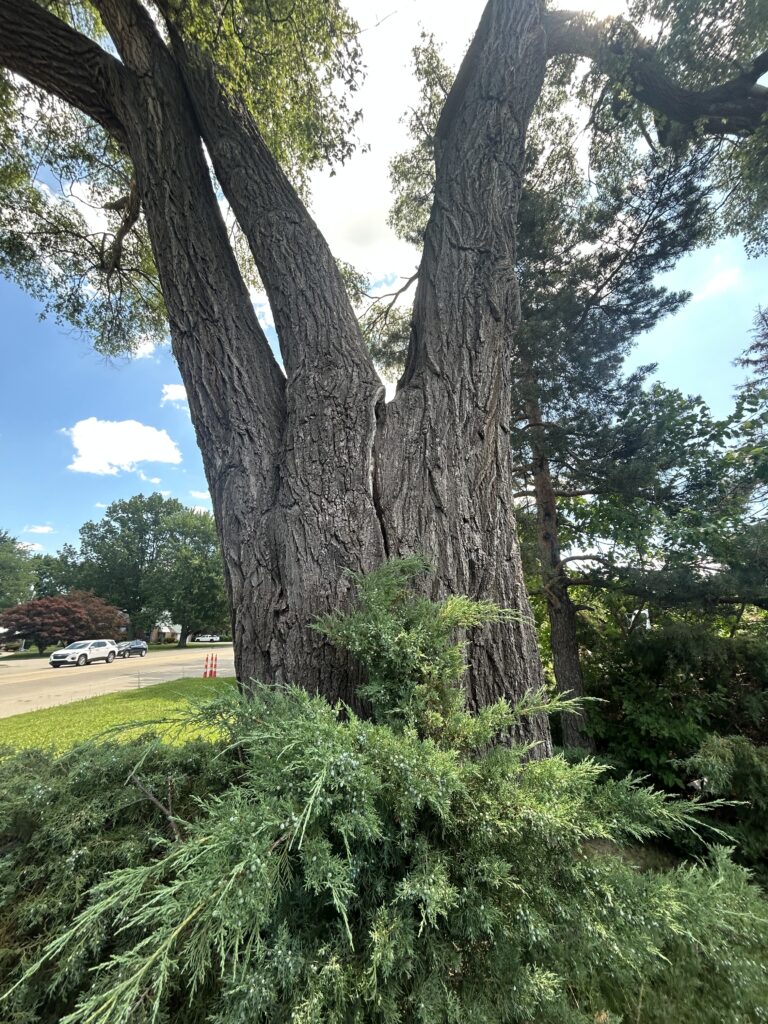

Large mature tree with a thick multi-trunk base surrounded by evergreen shrubs in a residential landscape, showcasing healthy urban greenery, shade trees, and natural outdoor landscaping.

Why You Shouldn’t DIY Hazardous Tree Removal

Frequently Asked Questions

How to determine if a tree is hazardous?

A tree is hazardous when it possesses a structural defect and is within striking distance of a “target” such as a person, home, or vehicle. You determine this by checking for dead branches, deep cracks in the trunk, and fungal growth at the base which indicates internal rot.

Removal is necessary when more than 50% of the tree is damaged or diseased because it rarely recovers its structural integrity beyond that point. You should also remove it if the main trunk is hollowed out by more than one-third or if its roots are causing foundation damage.

A hazardous tree is defined by the combination of a physical flaw and a potential target. A rotten tree in the middle of a remote forest is not a hazard, but a rotten tree next to a public sidewalk is a high-priority risk.

A dead tree eventually loses its structural strength and will fall during high winds or heavy rain. Beyond the physical risk, it becomes a major attractant for wood-boring pests like termites and carpenter ants which may eventually migrate to your home.

Worry when you see a sudden change in the tree’s lean or if you notice large cavities forming in the main stem. If the leaves on only one side of the tree turn brown or fall off prematurely it often indicates a serious root or vascular problem.

A hollow tree often has visible cavities or “bleeding” sap from the trunk and may sound empty when struck with a mallet. Rot is often signaled by the presence of mushrooms at the base or bark that peels away easily to reveal soft damp wood underneath.

You should consider removal if the tree has large dead branches in the upper canopy that cannot be safely pruned or if it has “included bark” where two stems grow into each other. If the tree is a non-native invasive species that is also leaning it is often better to replace it.

FAQs Of Tree Removal Services
