
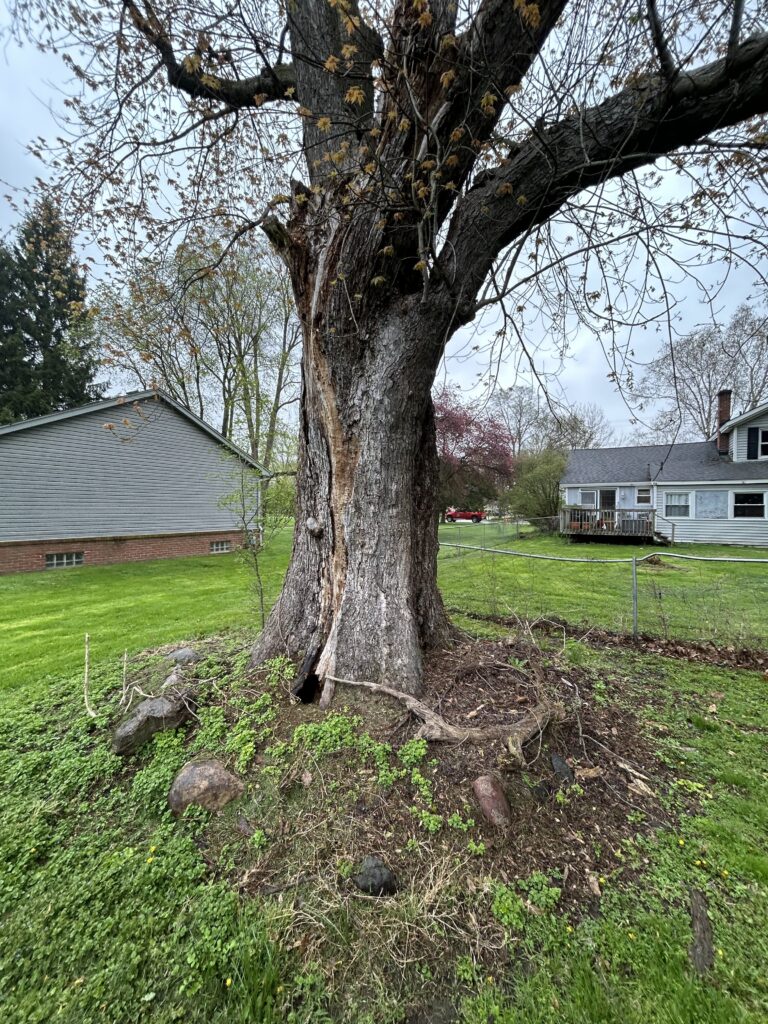
A lightning strike can change the future of a tree in seconds.
To homeowners, the damage may seem minor at first. The tree is still standing. Leaves are still growing. The canopy still provides shade. It may even appear healthy for years after the storm passes.
But inside the tree, a very different story may be unfolding.
Recently, the experts at Tree Solutions LLC completed a maple tree removal in New Baltimore, Michigan that perfectly illustrates this hidden danger. Years earlier, the maple had been struck by lightning. At the time, it appeared to survive the storm. However, over the years, internal decay and structural weakening slowly transformed the tree into a serious hazard.
What looked stable from the outside had become dangerously compromised within.
Unfortunately, this is something arborists see all too often after severe storms.
Lightning damage doesn’t always kill a tree immediately. In many cases, the strike creates long-term structural problems that develop slowly over time, eventually increasing the risk of falling limbs, trunk failure, and property damage.
For homeowners, understanding how lightning affects trees is critical for protecting both their landscape and their safety.
What Happens When Lightning Strikes a Tree?
Trees are among the most common natural targets during thunderstorms because they are often the tallest objects in the landscape.
When lightning hits a tree, the electrical current travels through its moisture-rich internal structure in search of the ground. The extreme heat generated by the strike rapidly superheats water and sap inside the tree, creating steam almost instantly. This sudden expansion can split bark, crack trunks, and destroy vital tissues beneath the surface.
The visible damage may include:
- Bark blown off in strips
- Long vertical cracks
- Splintered wood
- Broken branches
- Scorch marks
- Canopy dieback
However, not all damage is visible immediately.
In many cases, the internal vascular system of the tree suffers extensive trauma even when the exterior appears relatively intact. The electrical current often travels through the cambium layer just beneath the bark, which is responsible for transporting water and nutrients throughout the tree. When this system becomes damaged, the tree’s long-term health and structural stability can decline significantly.
Why Some Lightning-Struck Trees Survive Initially
One of the biggest misconceptions homeowners have is believing a tree is safe simply because it survives the initial strike.
Trees are incredibly resilient organisms. Even after major trauma, they may continue producing leaves and maintaining outward signs of life for months or even years.
But survival does not always mean recovery.
According to arborist research and university horticulture sources, lightning damage can take years to fully reveal itself. Internal cracks, decay, and vascular damage may slowly worsen over time while the tree still appears healthy externally.
This delayed deterioration is what makes lightning-struck trees particularly dangerous.
A tree may seem perfectly stable until one storm, heavy snowfall, or strong wind event finally exposes the hidden weakness inside.
The Hidden Long-Term Damage Lightning Causes
Lightning doesn’t simply scar the outside of a tree.
The real danger often develops internally.
Over time, several serious problems can emerge after a strike.
Internal Decay and Rot
When lightning damages the protective layers of a tree, fungi and decay organisms gain easier access to the interior wood.
As decay spreads, the structural strength of the trunk and major limbs gradually weakens. Because this process often happens internally first, homeowners may not realize the extent of the damage until advanced deterioration has already occurred.
Some trees eventually become hollow while still standing upright.
Structural Weakness
Lightning frequently creates deep vertical splits and fractures within the trunk.
Even if the bark partially closes over these wounds, the internal wood fibers may remain compromised permanently. Repeated exposure to wind, rain, snow, and freezing temperatures can worsen these weaknesses over time.
Eventually, major trunk failure becomes a real possibility.
Dead or Failing Limbs
Branches connected to damaged vascular tissues may begin dying slowly over several seasons.
These weakened limbs can unexpectedly break and fall, especially during storms or periods of high wind.
Large limb failures pose serious risks to homes, vehicles, power lines, patios, and people below.
Increased Risk of Sudden Failure
One of the most dangerous aspects of lightning-damaged trees is unpredictability.
A compromised tree may stand for years before suddenly failing with little warning. Arborists often find significant internal decay in trees that still appear relatively healthy from the outside.
That unpredictability is why professional evaluations are so important after storm damage.
A Real Example: Maple Removal in New Baltimore, MI
The recent maple removal handled by Tree Solutions LLC in New Baltimore tells a story many homeowners can learn from.
Years ago, the tree was struck by lightning.
At first, it appeared to survive without catastrophic damage. It continued growing leaves and remained standing on the property. From the outside, it may not have seemed like an immediate concern.
But internally, the strike had already changed the tree permanently.
As years passed, structural damage and internal weakening continued developing beneath the surface. What looked like a healthy maple externally had become hazardous from within.
Eventually, the tree posed a serious risk to the property below.
Removal became the safest solution.
This situation highlights an important reality: lightning damage is not always immediate. Sometimes the greatest danger appears years after the original storm.
Signs a Lightning-Struck Tree May Be Dangerous
Every lightning-struck tree should be professionally assessed, even if it appears healthy.
Some warning signs homeowners should watch for include:
- Long vertical trunk cracks
- Bark peeling or missing in strips
- Dead branches in the canopy
- Sudden leaning
- Mushrooms or fungal growth near the base
- Hollow sounding sections
- Sparse leaf growth
- Splitting limbs
- Decay pockets
- Unusual branch drop
However, some dangerous trees show very few visible symptoms initially.
Internal decay can remain hidden for years.
That’s why relying only on visual appearances can be risky.
Why Professional Tree Inspections Matter After Storms
After severe weather, many homeowners focus only on obvious damage like fallen limbs or uprooted trees.
But lightning damage often requires a more detailed evaluation.
Professional arborists understand how to detect subtle signs of structural instability that may not be visible to untrained eyes. A proper inspection can identify hidden weaknesses before they turn into emergencies.
A professional storm damage assessment may help:
- Prevent costly property damage
- Reduce liability risks
- Protect nearby structures
- Preserve healthy trees when possible
- Detect internal decay early
- Improve overall landscape safety
In some cases, pruning or structural support systems may help extend a tree’s life safely. In other situations, removal may be necessary to eliminate risk.
The key is identifying the problem early.
Michigan Storms Can Make Existing Damage Worse
In Michigan, storms are a regular part of life.
Thunderstorms, high winds, heavy snow, and ice accumulation place enormous stress on trees every year. A tree already weakened by lightning becomes even more vulnerable under these conditions.
Over time, repeated environmental stress can accelerate structural failure.
Large trees located near homes, garages, driveways, and outdoor spaces deserve especially close monitoring after storm damage.
A tree that survived one storm may not survive the next.
Can a Lightning-Struck Tree Recover?
Sometimes it can.
The outcome depends on several factors, including:
- The severity of the strike
- The tree species
- Overall health before the strike
- Amount of bark loss
- Extent of internal damage
- Structural stability
- Location of the tree
Some trees recover surprisingly well with proper care and monitoring. Others continue declining slowly for years before eventually becoming hazardous.
Research from arborists and forestry experts shows that the long-term effects of lightning can vary significantly between trees.
That uncertainty is another reason professional evaluation is essential.
The Cost of Ignoring Lightning Damage
Delaying action after storm damage can become extremely expensive.
A failing tree can damage:
- Roofs
- Vehicles
- Fences
- Decks
- Power lines
- Garages
- Landscaping
- Outdoor structures
In severe cases, falling limbs or complete tree failures can also threaten personal safety.
Emergency tree removals are often more dangerous and more costly than proactive inspections and planned removals.
Addressing storm damage early helps reduce these risks significantly.
Why Homeowners Trust Tree Solutions
When it comes to evaluating storm-damaged trees, experience matters.
The professionals at Tree Solutions LLC understand how lightning and severe weather affect tree structure over time. Their team helps homeowners identify hidden hazards, assess tree stability, and make informed decisions about preservation or removal.
Whether a tree requires monitoring, pruning, or complete removal, having experienced experts evaluate the situation can help protect both your property and your safety.
Storm damage is not always obvious.
Sometimes the most dangerous problems are the ones hidden beneath the bark.
Final Thoughts
A tree surviving a lightning strike does not guarantee it is safe long-term.
That’s the most important lesson homeowners should remember.
Lightning can create hidden structural damage that slowly worsens over time, eventually leading to decay, failing limbs, or catastrophic collapse years after the original storm.
The maple removal in New Baltimore is a reminder that what appears healthy on the outside may be severely compromised internally.
If you have a tree that has experienced storm damage, it’s worth having it professionally inspected before hidden problems become costly emergencies.
Working with experienced professionals like Tree Solutions LLC can help identify risks early, protect your property, and keep your landscape safe for years to come.