
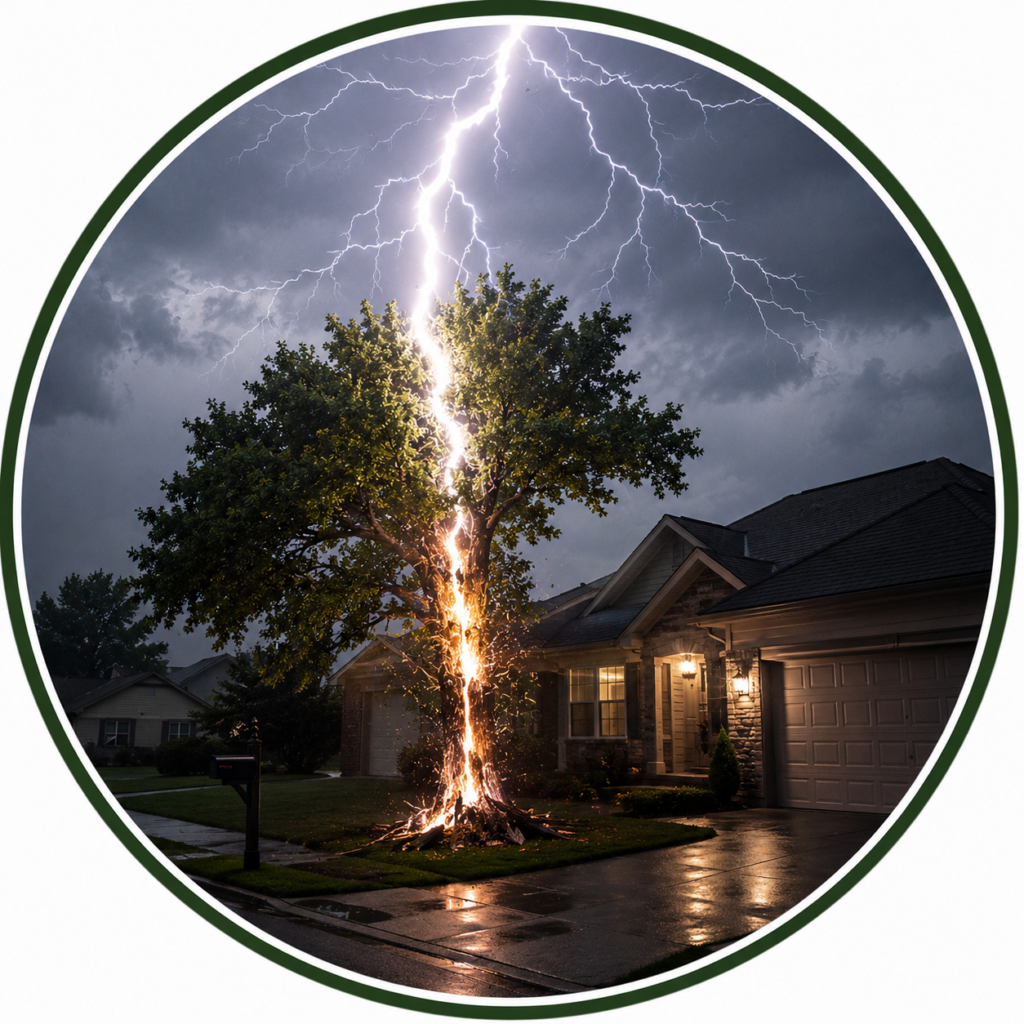
A lightning strike can turn a healthy tree into a serious safety hazard in seconds. One moment your yard looks normal, and the next, bark is exploding off the trunk, branches are hanging dangerously, and the tree may be silently dying from the inside out.
Many homeowners assume that if a tree is still standing after a storm, it is probably fine. Unfortunately, that is not always true.
Lightning-damaged trees can remain unstable for weeks, months, or even years. Some recover with proper care, while others become dangerous without showing obvious signs right away. That is why professional inspection matters immediately after a strike.
At Tree Solutions LLC, experienced tree care professionals regularly help homeowners identify hidden storm damage before it becomes a risk to people, homes, vehicles, or power lines.
Why Trees Attract Lightning
Trees are among the tallest natural objects in many landscapes, which makes them common targets during thunderstorms. According to the U.S. Forest Service, lightning typically strikes the tallest object in an area.
A tree’s moisture content also makes it highly conductive. When lightning enters the tree, the electrical current rapidly heats the water inside the trunk and branches. This creates steam pressure so intense that it can literally blow bark off the tree or split the trunk apart.
Trees are especially vulnerable if they are:
- Standing alone in an open yard
- Taller than nearby trees
- Located on hills or ridges
- Growing near water
- Large mature specimens with wide canopies
What Happens When Lightning Strikes a Tree?
The damage can be dramatic or surprisingly subtle.
In severe cases, the strike may:
- Split the trunk vertically
- Blow bark completely off the tree
- Shatter major limbs
- Cause immediate fire or smoke
- Destroy the root system
- Kill the tree instantly
In less obvious cases, the tree may look mostly normal while suffering internal structural damage that weakens it over time.
This hidden damage is what makes lightning-struck trees particularly dangerous.
Is a Lightning-Struck Tree Dangerous?
Yes, it absolutely can be.
A lightning strike can compromise the structural integrity of the tree even if the canopy still appears green. Cracks inside the trunk, damaged roots, or weakened limbs may not be visible from the ground. Over time, these weaknesses can cause sudden branch failure or complete collapse.
The danger becomes much higher when the tree is:
- Close to a home
- Near driveways or sidewalks
- Hanging over power lines
- Located in high-traffic areas
- Already weakened by disease or decay
Even if the tree survives the initial strike, internal damage can trigger slow decline. Some trees die months later because their vascular system was damaged by the heat generated during the strike.
Signs a Tree Was Struck by Lightning
Some symptoms appear immediately after the storm, while others develop slowly.
1. Long Vertical Cracks
One of the most common signs is a long scar running down the trunk. The bark may appear peeled away in strips.
This happens because the electrical current travels through moisture beneath the bark.
2. Bark Explosions
Lightning can cause bark to explode outward violently. Homeowners often find bark scattered around the base of the tree after a storm.
3. Sudden Leaf Wilting
Leaves may suddenly brown, curl, or fall off even though the tree looked healthy before the storm.
4. Hanging or Broken Limbs
Large limbs may weaken or partially detach, creating immediate hazards.
5. Burn Marks or Smoke Damage
Some trees show blackened bark or signs of scorching.
6. Leaning or Root Damage
A lightning strike can damage roots underground, making the tree unstable during future windstorms.
Can a Lightning-Struck Tree Survive?
Sometimes, yes.
Not every lightning strike kills a tree. Some trees recover fully, especially if the damage is limited to the bark or outer cambium layer.
Recovery depends on several factors:
- Tree species
- Age and overall health
- Severity of the strike
- Extent of root damage
- Presence of decay before the strike
- Speed of professional treatment
However, survival does not automatically mean the tree is safe.
A tree may stay alive while still becoming structurally compromised. That is why professional assessment is critical after any significant strike.
Why You Should Never Ignore Lightning Damage
Many homeowners wait because the tree “still looks okay.”
That delay can become expensive and dangerous.
Lightning damage often creates entry points for:
- Insects
- Fungal infections
- Internal decay
- Rot
- Disease
As the damaged areas weaken, large branches can fail without warning. In storms or high winds, the entire tree may eventually collapse.
Professional arborists often see trees that appeared stable for months before suddenly failing.
What To Do Immediately After a Tree Is Struck
Stay Away From the Tree
Do not stand beneath damaged branches or touch hanging limbs. Trees weakened by lightning can fail unexpectedly.
Keep Children and Pets Away
Block access to the area until the tree has been inspected.
Look for Nearby Hazards
Watch for:
- Fallen power lines
- Split branches
- Cracked trunks
- Leaning movement
If power lines are involved, contact emergency services immediately.
Take Photos
Document visible damage for insurance purposes.
Call a Professional Tree Expert
This is the most important step.
A certified tree professional can assess:
- Structural integrity
- Internal damage
- Root stability
- Risk of failure
- Whether the tree can be saved
At Tree Solutions LLC, trained experts help homeowners determine whether a lightning-struck tree needs removal, pruning, stabilization, or long-term monitoring.
Can You Save a Lightning-Struck Tree?
In some cases, yes.
Professional treatment may include:
- Corrective pruning
- Cabling and bracing
- Soil and root care
- Monitoring for decay
- Pest prevention
- Crown restoration
Quick action improves the chances of recovery significantly.
Healthy trees with limited damage often respond better to treatment than older trees already dealing with stress or decay.
Should You Remove the Tree?
Removal is usually recommended when:
- The trunk is deeply split
- Major limbs are destroyed
- The tree leans dangerously
- Root systems are compromised
- The tree threatens structures or people
- Internal decay is extensive
Sometimes removal is the safest and most cost-effective solution.
This is especially true when the tree stands near homes, garages, vehicles, patios, or utility lines.
How Arborists Assess Lightning Damage
Professional tree inspections go far beyond visible bark damage.
Experienced arborists evaluate:
- Trunk stability
- Internal decay
- Root health
- Canopy condition
- Structural defects
- Likelihood of failure
Some damage is invisible from the outside. Trees can appear healthy while hiding dangerous internal fractures.
That is why professional evaluation matters more than visual guesses.
Can Lightning-Struck Trees Catch Fire?
Yes.
Lightning can ignite internal fires that smolder unnoticed inside the trunk. In dry conditions, this may spread to nearby vegetation or structures.
Even when flames are not visible, the heat from the strike can severely damage internal tissues.
Are Certain Trees More Vulnerable?
Tall trees in exposed areas face the highest risk.
While lightning can strike any species, large mature trees are more likely targets because of their height and canopy spread.
Trees standing alone in open lawns are especially vulnerable compared to trees protected within dense forests.
Can You Prevent Lightning Damage?
You cannot completely prevent lightning strikes, but you can reduce risk.
Professional arborists may recommend:
- Regular pruning
- Removing dead limbs
- Installing lightning protection systems
- Monitoring vulnerable trees
- Improving tree health
Lightning protection systems are sometimes used for historic, valuable, or exceptionally large trees.
Why Professional Tree Care Matters After a Storm
Storm damage is not always obvious.
Many homeowners underestimate the danger because the tree remains standing. Unfortunately, hidden structural damage is common after lightning strikes.
Professional evaluation helps determine:
- Whether the tree is safe
- If recovery is possible
- Whether emergency removal is necessary
- How to protect nearby property
Experienced tree care specialists understand how to identify hidden storm damage and recommend safe, practical solutions that protect both your landscape and your property.
Final Thoughts
A lightning-struck tree should never be ignored.
Some trees recover with proper care, but others become serious hazards long before obvious symptoms appear. Hidden cracks, root damage, and internal decay can make a tree unstable even if it still looks alive and healthy.
The safest approach is always to have the tree professionally inspected after a strike.
Fast action can help save a recoverable tree, prevent property damage, and reduce the risk of dangerous failures later on.
If you suspect a tree on your property was struck during a storm, the experts at Tree Solutions LLC can help evaluate the damage and recommend the safest next steps for your landscape.