
A tree can have a full canopy, green leaves, and no obvious signs of disease and still be at risk of falling. While healthy foliage is generally a positive sign, it does not necessarily mean a tree’s trunk, branches, or root system are structurally sound.
For Michigan homeowners, this is an important consideration, especially when mature trees grow close to houses, garages, driveways, and other structures. Strong winds, heavy snow, saturated soil, and hidden structural defects can cause a tree or large branch to fail with little visible warning.
Understanding why trees fall, what warning signs to look for, and when to seek professional help can help protect your property before a tree becomes a serious hazard.
Why Can a Healthy-Looking Tree Fall?
A tree’s appearance does not always reflect its structural condition. Internal decay, damaged roots, cracks, and weak branch connections can develop while the tree continues producing leaves and growing.
The USDA Forest Service’s Urban Tree Risk Management guide explains that a tree can fail.
This can happen when forces on the tree exceed the strength of its trunk, branches, or roots. Existing defects can make a tree more vulnerable to those forces during storms or other stressful conditions.
Here are some of the main reasons a tree may fall even when it appears healthy.
1. Internal Decay Can Weaken the Trunk
Fungi that cause wood decay can break down a tree’s internal wood, reducing its structural strength. In some cases, the outer layer of the trunk remains intact, concealing deterioration inside.
A tree may continue growing despite internal damage, which makes the problem difficult to identify through foliage alone. Cavities, cracks, old wounds, and fungal growth on the trunk can indicate a possible issue, although not every cavity means a tree is about to fall.
Research in Forestry studied internal stem decay in 1,246 trees.It covered 33 species in the northeastern United States and New Brunswick, Canada. The study highlighted how decay varies with species, tree size, and other factors, demonstrating why structural condition cannot be judged from appearance alone.
2. Root Damage Can Affect Tree Stability
Roots anchor a tree in the ground and help it absorb water and nutrients. When the root system is damaged, decayed, or restricted, the tree may become less stable even if its canopy remains green.
Root problems can develop because of soil compaction, construction work, excavation, changes in drainage, or root disease. Damage below ground may go unnoticed until the tree begins leaning or the surrounding soil shifts.
Watch for fresh soil cracks, raised ground near the trunk, exposed or damaged roots, and a new change in the tree’s position. These signs warrant professional assessment, particularly after heavy rain or strong winds.
3. Cracks and Weak Branch Connections Can Lead to Failure
A tree does not need to fall entirely for it to pose a risk. A large limb can break away and damage a roof, vehicle, fence, or other property.
Cracks in the trunk, splitting between major stems, and branches with weak attachment points can indicate structural problems. Trees with multiple stems growing closely together may also develop weak unions, particularly when bark becomes trapped between the stems.
These defects can become more concerning when heavy snow or strong winds place additional stress on the tree. A tree that has experienced previous branch failure should be evaluated to determine whether other parts of its structure may also be compromised.
Warning Signs That a Tree May Be at Risk of Falling
Some hazardous trees show visible warning signs, while others have defects that are difficult to identify without a closer examination. Pay attention to changes in the tree and its surrounding soil rather than relying only on leaf color or canopy fullness.
Important signs include:
- A sudden lean: A tree that has recently started leaning, especially with soil lifting around its base, may have root or anchorage problems.
- Large cracks in the trunk: Deep splits or cracks where major stems meet can indicate structural weakness.
- Fungal growth near the base: Mushrooms or other fungal fruiting bodies around the trunk or roots may indicate decay, although identification is needed to understand their significance.
- Dead or hanging branches: Large dead limbs can break and fall, even when the rest of the tree appears healthy.
- Hollows, cavities, or damaged bark: These may be associated with decay or previous injuries that affect the tree’s structural condition.
- Recent changes after a storm: Broken limbs, a newly tilted trunk, disturbed soil, or cracks that were not present before should not be ignored.
No single sign can reliably predict exactly when a tree will fail. A qualified professional must consider the defect, the tree’s condition, the surrounding environment, and what could be affected if failure occurs.
How Michigan Weather Can Increase Tree Failure Risk
Michigan trees experience changing weather conditions throughout the year. Strong winds, thunderstorms, heavy snowfall, and periods of saturated soil can place additional loads on trees and expose weaknesses that were already present.
During storms, wind pushes against the canopy and creates stress on the trunk, branches, and roots. Heavy, wet snow can increase the weight carried by branches, particularly those with weak attachments or existing damage.
Saturated soil can also reduce root anchorage in certain conditions. If roots are already compromised, a tree may be more susceptible to uprooting during strong winds.
Weather does not automatically make a healthy tree hazardous. However, storms can trigger failure in trees with pre-existing defects. After severe weather, look for broken limbs, cracks, changes in trunk position, and disturbed soil around the base.
If a tree is leaning toward a building or has a large hanging branch, keep people away from the affected area and arrange a professional assessment. Do not attempt to cut or pull down damaged limbs yourself.
Can a Tree Be Saved, or Does It Need to Be Removed?
Not every tree with a defect needs to be removed. The right response depends on the damage location and severity, the tree’s structure, its condition, and failure risks.
In some situations, professional pruning may reduce risk by removing damaged or poorly attached branches. Other trees may require additional assessment because internal decay or root damage is suspected.
Removal may be necessary when a tree has severe structural deterioration, extensive root damage, or defects that cannot be managed adequately through pruning. The decision should be based on the tree’s actual condition rather than its appearance alone.
A professional assessment can help determine whether the tree can remain on the property, needs targeted trimming, or presents a level of risk that warrants removal. This is particularly important for large trees located near homes, garages, driveways, and areas where people regularly gather.
Why Professional Tree Assessment Matters
Identifying potential hazards requires more than looking for dead leaves or visibly damaged branches. A tree care professional can examine the trunk, major branch unions, root area, and surrounding conditions to identify signs of structural weakness.
The USDA Forest Service recommends evaluating tree defects alongside the likelihood of failure and the potential consequences for people and property. Research on tree risk assessment also highlights the limitations of relying on visual appearance alone, particularly when internal decay is present.
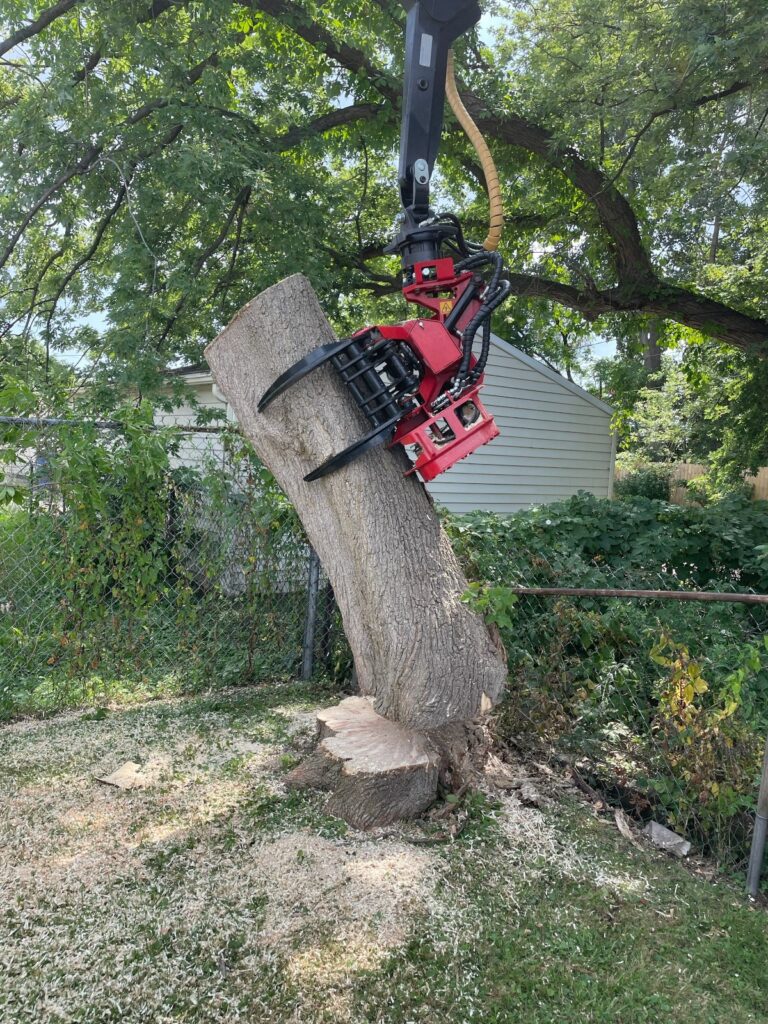
If a tree appears unstable, avoid climbing it, cutting into the trunk, or disturbing its roots to investigate the problem. Large-tree removal can involve unpredictable loads, falling limbs, and hazards around nearby structures, making professional equipment and controlled removal methods essential.
Protect Your Property With Tree Solutions LLC
A tree does not have to look dead to present a safety concern. Hidden decay, root damage, weak branch attachments, and storm-related stress can all affect its stability.
If you have a mature tree with a new lean, visible cracks, damaged roots, or large dead branches, do not wait for the next storm to find out whether it is safe. Addressing potential hazards early can help you make a more informed decision about tree care and protect the structures around it.
Tree Solutions LLC provides professional hazardous tree removal.
They also offer tree trimming.
They provide emergency tree services in Macomb and Oakland Counties, Michigan. Its team handles trees that threaten homes and other structures, including complex removals that may require specialized equipment.
Contact Tree Solutions LLC to discuss your tree concerns and determine the appropriate next step for your property.