
When a tree falls on its own, especially one from a neighbor’s yard and causes damage to your property, one of the first questions most people ask is: Could this have been prevented? And if so, was the neighbor responsible?
Whether it’s damage to a roof, a fence, a vehicle, or even injury to a family member, determining responsibility often comes down to whether the tree was a known hazard before it fell. Proving that isn’t always easy, but it is possible when you understand what evidence matters and how it fits into legal and insurance frameworks.
This guide walks you through how to build that case using real documentation, expert input, visible proof, and applicable legal principles.
Why Evidence Matters: Beyond “It Looked Dangerous”
In most U.S. states, the general rule in cases involving fallen trees is that a property owner is only responsible if they knew or should have known that the tree was a hazard and failed to take reasonable action. This concept, rooted in negligence law, applies whether you’re in Michigan, Ohio, Florida, or many other jurisdictions.
What does “knew or should have known” actually mean? At its core, it’s about establishing what the neighbor’s awareness was before the incident, not after the fact.
To prove this, you don’t need a crystal ball. You need something much more grounded: evidence.
Don’t forget to check out: What is the Difference Between Pruning and Trimming?
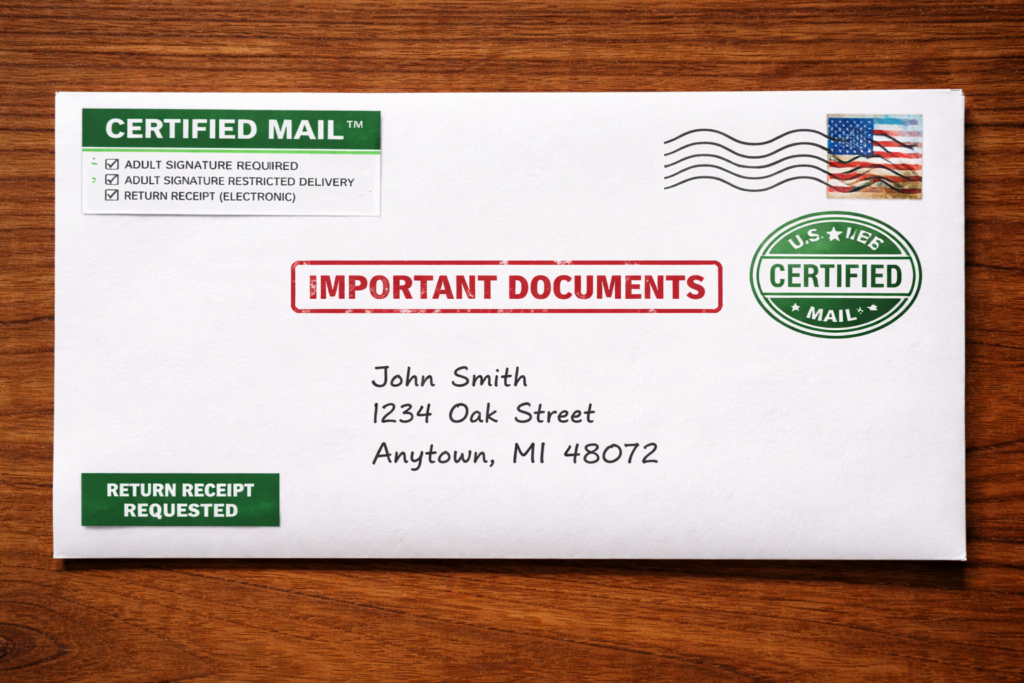
The Paper Trail: Using Written Notices and Certified Mail as Primary Evidence
People often underestimate the value of formal written notice. A casual conversation like “Hey, your tree looks iffy” may make sense socially, but legally, it often doesn’t carry much weight.
Sending a written notice about a potentially hazardous tree removal to your neighbor accomplishes two important things:
- It documents that you saw a risk and alerted the neighbor, and
- It creates a record that could support claims of negligence if the tree later falls.
Why Certified Mail Is Important
Sending that notice via certified mail, especially with a return receipt requested, offers undeniable proof that your neighbor received the communication. Courts and insurance companies look at that as strong evidence that the property owner had actual notice of a potential hazard.
This is particularly helpful in demonstrating “actual notice,” meaning the neighbor literally knew about the danger.
Expert Testimony: Why an Arborist’s Report Is Often Your Strongest Asset
Photos and letters are useful, but nothing speaks louder in a legal or insurance context than professional, expert testimony.
Who Is an Arborist and Why Their Opinion Matters
An arborist is a trained tree care professional who understands tree biology, structural risk factors, disease signs, and environmental stressors. Certified arborists, in particular, follow industry standards used in court cases and insurance claims because their opinions are considered objective and evidence-based.
An arborist report can show:
- Detailed assessment of tree health
- Visible decay, rot, or disease
- Structural flaws such as cracks or splits
- Root instability or compromised root systems
- Whether the condition was likely present before the tree fell
This kind of evaluation goes beyond “it looked bad”; it gives a professional opinion on how long a hazard existed and how likely it was to fail, bolstering your case significantly.
If that report was shared with the neighbor before the tree fell, it becomes even stronger evidence that they knew about the hazard.
Visual Proof: Documenting Rot, Leaning, and Dead Limbs Before Disaster
Physical evidence matters. In fact, it’s often the backbone of a strong claim.
What to Document and How
If you suspect a tree is dangerous, particularly if it’s near your home, garage, fence, or other structures, start documenting early. This can include:
- Photos showing large dead limbs or missing bark
- Visible rot, fungus, splits, or cracks
- Leaning trunks or branches overhanging your property
- Root problems or soil upheaval
- Progressive deterioration over time
The key is dates. If you have dated photos or videos, even from months or years before a failure, they help build a timeline demonstrating that the hazard existed well before the tree fell.
A series of visuals that show worsening conditions over time strengthens your ability to argue that the risk wasn’t sudden or unforeseeable, it was ongoing. Evidence that a reasonable person should have noticed these signs can transform an ordinary negligence claim into a credible one.
Establishing “Duty of Care”: How Local Legal Principles Define Liability
If a neighbor knew, or reasonably ought to have known, that their tree posed a risk of harm and didn’t act, then they may be held liable for resulting damage.
This is often grounded in the common law duty of care. The modern legal trend in the U.S. is that homeowners are not automatically liable when a tree falls unless it was clearly hazardous and their inaction contributed to harm.
There are two types of notice often referenced:
- Actual notice: The neighbor was directly informed about the hazard, e.g., a certified letter, an arborist report, or a written notice.
- Constructive notice: The hazard was so obvious that a reasonable person should have seen it, e.g., a large, rotting, fungus-covered tree with a pronounced lean.
Determining whether “should have known” applies often depends on how visible and significant the signs were.
Don’t forget to check out: Understanding the Most Common Mistakes Homeowners Make When Trimming Trees
Combining Evidence: The Checklist That Makes Your Case Stronger
To build a reliable case that a neighbor’s tree was a known hazard before it fell, multiple documented elements are often used together:
1. Written Notice Sent Before the Incident
Certified letters detail your concerns about the tree’s condition. This creates a documented timeline that courts and insurance companies can verify.
2. Certified Arborist Report
An expert review that assessed the tree’s risk before it fell carries significant weight because it explains why the tree was dangerous, not just that it was.
3. Dated Photographs or Videos
Visual proof over time shows that the tree’s condition was worsening, not suddenly failing.
4. Local Ordinances or Property Codes
Some municipalities require tree maintenance and hazard mitigation, violating these requirements can support liability if a clearly dangerous tree is ignored.
5. Communication Records
Emails, texts, notices, or even neighbor statements acknowledging they saw the dangerous tree can help establish awareness.
These combined evidence elements help show:
- The tree was hazardous
- The property owner knew (or should have known)
- They failed to address it
- That failure resulted in harm
Why Some Arguments Fail: The “Act of God” and Other Defenses
Not all tree failures equate to liability.
Insurance carriers and defense attorneys often raise the “act of God” defense. This means the tree fell due to an unusual, unpredictable natural event like a freak storm and not because of any negligence. Under this defense, even if a tree looked suspicious, liability may not stick if the cause was extraordinary weather conditions that no reasonable person could have anticipated.
By contrast, when a tree is dead, visibly decaying, or clearly unstable for an extended period before falling, it’s hard to characterize that as unforeseeable. That’s where prior documentation and expertise like arborist reports become crucial evidence.
Once a Tree Falls: What to Do Next
Even with great evidence, building a claim requires care and documentation after the incident as well.
Here’s a better-than-typical sequence many property owners follow:
- Document the scene immediately: Photos of damage, fallen trunk, and stump condition.
- Contact your insurance provider: Do this early to begin the claims process. Insurers will often assess coverage and possible subrogation against the neighbor’s insurer if negligence is proven.
- Preserve all pre-incident evidence: Include your earlier photos, notices, and reports.
- Share findings with your neighbor calmly: Starting a conversation often avoids escalation.
- Seek legal advice if needed: Especially if liability or damage costs are substantial.
Common Misconceptions About Neighbor Tree Liability
There are a few things many homeowners think are true when they aren’t:
“If the tree were dead, the neighbor is automatically liable.”
Not necessarily. Liability depends on whether they knew or reasonably should have known about the risk and failed to act. Visible signs help establish this condition.₍⁰search2⁾
“Certified notice alone proves liability.”
It helps, but by itself, a notice without supporting evidence (photos, expert reports) rarely convinces insurers or courts. Notice strengthens your case when paired with other proof.
“If the tree fell in a storm, the neighbor isn’t liable.”
While severe storms can be acts of God (no liability), milder weather events where the tree should have been addressed often shift liability to the property owner.
Conclusion: Building Evidence Makes All the Difference
Proving a neighbor’s tree was a known hazard before it fell isn’t about guesswork or gut feelings. It’s about building clear, documented evidence that a reasonable person could see a risk and that the tree owner had actual or constructive notice of that risk.
Here’s the takeaway:
- Start with a written notice to establish awareness
- Use expert evaluation from arborists to explain the tree’s risk
- Collect visual proof over time to show deterioration
- Understand legal duty principles about reasonable care
Doing this turns what could be a he-said/she-said dispute into something grounded in facts, something insurance companies, mediators, and courts can actually rely on.
That’s how you go from wondering “Could this have been prevented?” to confidently saying, “I have evidence it was a known hazard.
Disclaimer: This information is provided for general informational purposes only and is not intended as legal advice. Please consult with a qualified attorney for guidance specific to your situation.
Don’t forget to check out our business profile: Tree Solutions LLC