
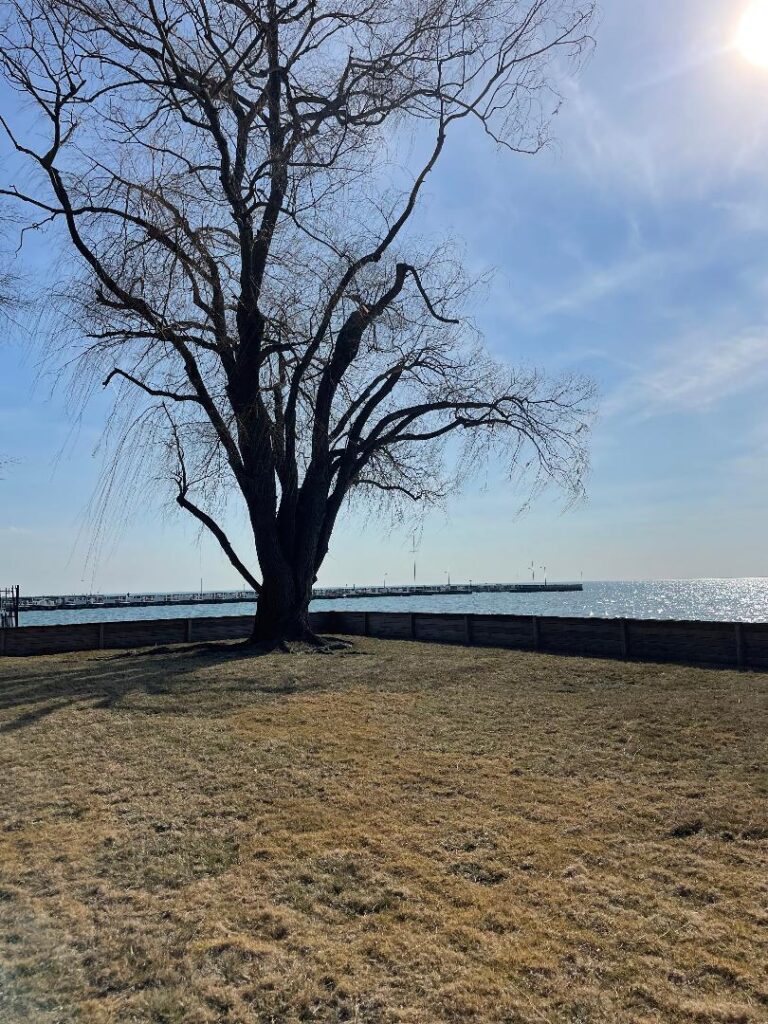
Michigan’s landscape would look very different without its trees. From sugar maples that turn bright red and orange in fall to tall eastern white pines, the state has many hardwoods and conifers.
Trees are also a major part of Michigan’s forests. According to the USDA Forest Service, the sugar maple-beech-yellow birch forest type accounts for about 19% of Michigan’s forestland, while aspen accounts for another 12%. Sugar maple, red maple, and balsam fir are among the state’s most numerous tree species.
But having a tree species that is naturally suited to Michigan does not mean it can be ignored. Every species has different growing preferences, structural characteristics, and potential health problems.
Whether you have mature trees in your backyard or are deciding how to care for a newly planted one, understanding the species is the first step toward keeping it healthy.
1. Sugar Maple
Scientific name: Acer saccharum
Sugar maple is one of Michigan’s most recognizable trees. It is valued for its brilliant fall color and is also the primary maple species associated with the state’s maple syrup industry.
The species naturally grows in rich, moist forests and is relatively shade tolerant. USDA Forest Service research identifies sugar maple as an important component of northern hardwood forests and specifically documents its prominence in Michigan.
For homeowners, the biggest consideration is giving a sugar maple enough room to develop. Avoid compacting the soil around its root zone, maintain consistent moisture during prolonged dry periods, and avoid unnecessary pruning.
Young trees benefit from a layer of organic mulch around the root zone, but mulch should not be piled against the trunk.
As a mature tree becomes larger, professional inspection and pruning can help identify dead, damaged, or structurally weak branches before they become problems.
2. Red Maple
Scientific name: Acer rubrum
Red maple is one of the most adaptable native trees found in Michigan. It can grow in a wide range of soil and moisture conditions, from relatively dry uplands to wetter areas. USDA Forest Service research describes red maple as capable of growing across an unusually broad range of soil types, moisture conditions, and pH levels.
Its red flowers, winged seeds, and brilliant fall foliage make it a popular landscape tree.
The key to caring for red maple is avoiding unnecessary stress. Water young trees during dry periods, protect the root zone from heavy soil compaction, and inspect the canopy regularly for dead or damaged branches.
Because red maples can develop weak or poorly attached branches in some conditions, structural pruning while the tree is young can be particularly useful.
3. Northern Red Oak
Scientific name: Quercus rubra
Northern red oak is a large, long-lived Michigan tree that can reach roughly 60 to 75 feet. Its pointed leaf lobes, ridged bark, and acorns make it relatively easy to identify.
Red oaks generally perform well in full sun to partial shade. They need adequate space because mature trees develop substantial crowns.
One important concern for Michigan homeowners is oak wilt, a serious disease affecting oak trees. Avoid unnecessary damage to the tree and seek professional advice if you notice sudden canopy decline, unusual leaf discoloration, or extensive dieback.
Large mature oaks also deserve regular structural inspections. Removing a major limb from a large oak is not a job to approach casually, especially when the branch extends over a roof, driveway, or power line.
4. White Oak
Scientific name: Quercus alba
White oak is another important Michigan hardwood. Unlike red oak, its leaf lobes have rounded rather than pointed tips.
USDA Forest Service research describes white oak as adaptable to many upland sites, although it performs poorly on extremely dry, shallow soils and excessively wet locations.
White oaks are slow-growing compared with some faster-growing landscape trees, but they can become extremely valuable mature specimens.
Give young trees adequate water during establishment and avoid disturbing the root zone unnecessarily. As the tree matures, focus on maintaining strong branch structure rather than trying to drastically reduce its size.
5. Eastern White Pine
Scientific name: Pinus strobus
Michigan’s official state tree is the eastern white pine. It is one of the tallest trees commonly found in the state and can reach 50 to 100 feet. Its long, soft, blue-green needles occur in bundles of five.
White pine grows best in full sun to partial shade and can adapt to a range of conditions.
Because mature white pines can become extremely tall, location matters. A tree planted too close to a house or other structure can eventually create clearance and maintenance issues.
Regular inspections are especially important after heavy snow or strong winds. Large trees can accumulate significant weight in their crowns, and broken limbs should be addressed promptly.
6. Red Pine
Scientific name: Pinus resinosa
Red pine is another important Michigan conifer. It is particularly associated with sandy sites and is widely distributed across the Great Lakes region. USDA Forest Service research identifies red pine as an important species in Michigan’s forest communities, including areas around Lake Michigan.
Red pine generally prefers full sunlight and well-drained conditions.
Homeowners should avoid damaging the trunk and root system and should monitor mature trees for dead branches, storm damage, and signs of decline.
Because red pines can become large, spacing is important when planting them. Think about the tree’s mature height and canopy rather than the size of the tree when you bring it home from a nursery.
7. Trembling Aspen
Scientific name: Populus tremuloides
Trembling aspen is one of Michigan’s most common trees and is particularly important in the state’s forest ecosystems. The USDA Forest Service identifies aspen as the second-largest forest type in Michigan by forestland area, after the sugar maple-beech-yellow birch type.
Aspens grow relatively quickly, but that growth can come with structural challenges.
If an aspen is growing near a house, driveway, or other structure, inspect it regularly for dead limbs, decay, trunk damage, and signs of decline.
Fast-growing trees should not simply be allowed to grow without maintenance. Proper structural pruning can help manage potential hazards while the tree is still young.
8. Paper Birch
Scientific name: Betula papyrifera
Paper birch is easily recognized by its distinctive light-colored bark. Michigan’s DNR lists paper birch among the state’s native tree species.
Paper birch generally prefers cool, moist conditions and can struggle when exposed to prolonged heat, drought, or other environmental stress.
If you have one on your property, maintaining adequate moisture during extended dry weather can help reduce stress. Mulching the root zone can also help moderate soil moisture and temperature.
Watch for thinning foliage, dieback, and unusual bark or trunk damage. A declining birch should be evaluated rather than simply pruned aggressively.
9. Black Cherry
Scientific name: Prunus serotina
Black cherry is a native Michigan hardwood and an important component of several forest communities. It is also listed among the state’s native tree species by the Michigan DNR.
It can become a substantial tree when growing in favorable conditions.
Like other mature hardwoods, black cherry benefits from proper structural pruning when necessary. Remove dead or damaged branches, but avoid excessive cutting that removes too much of the canopy at once.
If you notice significant dieback, cavities, fungal growth, or major cracks, have the tree assessed rather than assuming the problem can be corrected with routine trimming.
10. American Basswood
Scientific name: Tilia americana
American basswood is another native Michigan hardwood and is commonly associated with sugar maple in northern hardwood forests. USDA Forest Service sources identify basswood as a common associate of sugar maple and other Michigan hardwood species.
Basswood performs well in fertile, moist conditions and can develop a broad crown.
Because mature basswoods can become large, homeowners should consider clearance from buildings and other structures when managing them. Regular inspections can help catch deadwood or structural problems before they become hazardous.
Caring for Michigan Trees Starts With the Right Location
Although these species are all capable of growing in Michigan, they don’t all perform equally well in every yard.
Soil type, drainage, sunlight, available space, and moisture all matter.
The general principle is simple: match the tree to the site instead of forcing the site to accommodate the tree.
This is particularly important when planting a new tree. A species that naturally grows in wet conditions may struggle in a dry, compacted yard. A large oak or pine planted too close to a house can eventually create clearance problems even if the tree itself remains healthy.
Don’t Wait Until a Tree Becomes a Hazard
Good tree care is not only about watering and watching for leaves. Mature trees need periodic evaluation to identify structural problems that may not be obvious from the ground.
Look for:
- Large dead branches
- Deep cracks in the trunk
- Broken or hanging limbs
- Cavities or significant decay
- Root damage
- Sudden leaning
- Significant canopy dieback
A tree doesn’t have to be removed simply because it has one damaged branch. In many cases, professional pruning can correct a problem while preserving the tree.
However, when a tree has extensive decay, severe structural damage, or an unacceptable risk to people or property, removal may ultimately be the safest option.
Professional Tree Care Can Protect Mature Trees
Michigan’s trees are valuable, but their size can make maintenance increasingly difficult as they mature.
That is where professional tree care becomes important.
Tree Solutions LLC can evaluate trees on your property and determine whether they need pruning, trimming, removal, or simply continued monitoring. Professional equipment and experience become especially important when branches extend over roofs, driveways, fences, or other structures.
The goal isn’t to remove trees unnecessarily. It is to keep healthy trees healthy and address dangerous ones before they cause damage.
Final Thoughts
Michigan is home to an impressive variety of trees, and many of the species found in its forests can also thrive in residential landscapes. Sugar maple, red maple, red oak, and white oak have different growing needs and care needs. Eastern white pine, red pine, trembling aspen, and paper birch also have different needs. Black cherry and American basswood have their own growing and care needs.
Knowing what species you have is the first step. The next is understanding when that tree needs professional attention.
Routine inspections and proper pruning can extend the life of healthy trees. Early action can stop small issues from becoming costly hazards. And when a mature or damaged tree has become unsafe, professional removal can protect your home and everyone around it.
If you’re unsure about a tree’s condition on your Michigan property, Tree Solutions LLC can assess it. We will recommend the right tree care option. This may mean keeping the tree with proper care. Or it may mean removing it when safety requires it.