
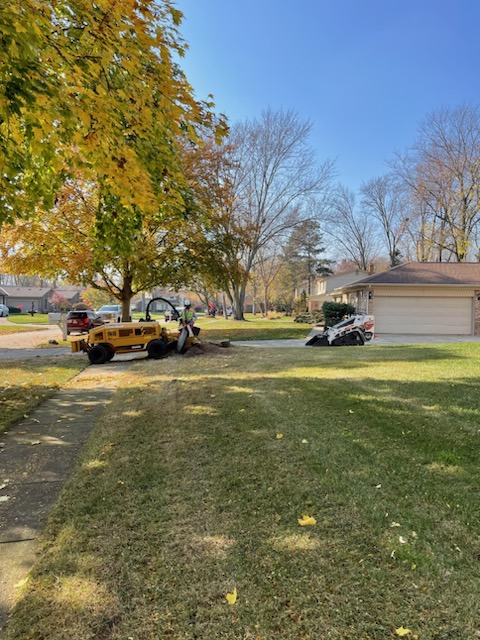
If you’ve ever stared at a stubborn stump sitting in the middle of your lawn, you already know it’s not just an eyesore. It’s a tripping hazard, a magnet for termites and carpenter ants, and an obstacle every time you mow. The good news is that removing it doesn’t have to mean a weekend of frustration and a sore back. The right equipment makes the difference between a quick afternoon job and a project that drags on for days.
So, what is the best equipment to remove stumps? The honest answer is: it depends on the size of the stump, the type of wood, your budget, and how much time you’re willing to spend.
Why Stumps Are Worth Removing in the First Place
According to the Arbor Day Foundation, stumps left in the ground can attract pests and interfere with the health of the surrounding landscape, especially if the tree was diseased or infested when it came down. Decaying stumps also hold moisture, which creates the exact conditions termites and fungi look for. If you’re planning to landscape, install a fence, or just want your yard to look finished, the stump has to go, the question is how.
Hand Tools: Fine for Small, Young Stumps
If the stump is small (generally under 10-12 inches in diameter) and hasn’t had years to develop a deep root system, manual tools can get the job done without any fuel or rental fees.
- Shovels and digging bars: Used to expose the root ball and cut through the soil around it.
- Mattocks or pickaxes: Break up compacted soil and sever smaller roots as you dig.
- Root saws or bow saws: Cut through thinner roots that a mattock can’t chop cleanly.
- Stump pullers (lever-style): Use leverage to pop smaller stumps and their roots straight out of the ground, which is often faster than digging alone.
The upside here is cost and simplicity. The downside is labor. Digging out even a modest stump by hand can take hours, and larger root systems will fight back the whole way.
Chemical Stump Removers: Slow, but Low-Effort
Chemical stump removal products, usually potassium nitrate-based, work by accelerating the decomposition of the wood. You drill holes into the stump, add the chemical, and wait often several weeks to a few months, before the softened wood can be broken apart and removed by hand or burned safely.
This method requires almost no physical effort, but patience is the real cost. It’s best suited for stumps in low-traffic areas where you’re not in a hurry to reclaim the space. Burning a stump down without professional guidance is far less predictable, and depending on your local fire codes, it may not be legal at all to always check local ordinances before considering it.
Stump Grinders: The Fastest Practical Option
For most homeowners and definitely for anyone dealing with a mature tree stump, a stump grinder is the tool that actually solves the problem in one sitting. A grinder uses a rotating cutting wheel lined with carbide teeth to chew the stump down below soil level, turning the wood into mulch-sized chips instead of leaving a crater.
A few things influence how a grinder performs:
- Horsepower: Smaller walk-behind units in the 10-20 HP range handle occasional homeowner jobs, while units in the 25-50+ HP range are built for repeated, heavy-duty use on hardwoods.
- Wheel diameter and tooth count: Larger wheels with more carbide teeth cut faster and handle rockier soil better, but they also demand more horsepower to run efficiently.
- Tooth material: Carbide-tipped teeth hold an edge far longer than standard steel, especially against dense hardwoods like oak.
Renting a walk-behind stump grinder is a realistic middle ground for a homeowner with one or two stumps to deal with. For properties with multiple large stumps, exposed rock, or hardwood root systems, contractor-grade grinders (and the experience to run them safely) make a much bigger difference.
Heavy Equipment: Excavators and Skid Steers
When a property has several large stumps, or when a stump needs to come out completely, roots and all, rather than being ground down, heavier equipment steps in. Mini excavators and skid steers fitted with grapples or toothed buckets can dig, sever, and pull an entire root ball out of the ground in one motion. This disrupts the surrounding soil more than grinding. It usually leaves a hole that needs backfill. But it is the fastest option when full removal, not just grinding, is the goal.
This is also where the decision to call in a professional crew starts making financial sense. Heavy equipment isn’t cheap to rent, it takes real skill to maneuver safely around underground utilities, fences, and structures, and one mistake can turn into an expensive repair bill.
Matching the Equipment to the Job
|
Situation |
Best Equipment |
|
Small, young stump (under 12″) |
Hand tools or a lever-style stump puller |
|
Medium stump, low urgency |
Chemical accelerant, then hand removal |
| Single mature stump |
Rented walk-behind stump grinder |
|
Multiple large or hardwood stumps |
Contractor-grade grinder or excavator |
| Storm damage or a hazardous leaning tree |
Emergency tree removal by a licensed crew |
Safety Comes First, Regardless of the Tool
Whichever method you choose, a few precautions matter every time:
- Call your local utility locator before digging or grinding, underground lines are a real risk.
- Wear eye protection, gloves, and sturdy boots; grinders throw debris and chips at speed.
- Keep kids and pets well clear of the work area.
- Never operate rented equipment you haven’t been shown how to use properly.
When It Makes Sense to Call in the Professionals
Not every stump is a DIY project, and that’s fine. If a stump is large, close to a structure or power line, part of storm cleanup, or one of several on a property, a professional stump removal service typically ends up cheaper than buying or renting equipment, patching up mistakes, and spending an entire weekend on it. Professional crews also carry the right insurance and equipment for risky jobs. This matters even more when you deal with a damaged or unstable tree.
If a storm has just taken down a tree, or a dead limb is threatening your roof, that’s a different level of urgency altogether. Emergency tree removal needs a fast response, proper rigging, and skilled crews. They safely remove hazardous trees without causing more damage to your property. Waiting on a DIY solution in that kind of situation isn’t worth the risk.
The Bottom Line
There’s no single “best” piece of equipment for every stump; the right tool depends on size, wood type, and how quickly you need results. Hand tools and chemical removers work for small, low-urgency jobs. Stump grinders are the practical choice for most homeowners dealing with a mature stump. Heavy equipment takes over when full root removal or large-scale clearing is the goal.
If the tree is hazardous, call a professional tree removal service. They can assess the stump, the soil, and the surrounding area. Then they can recommend the right approach. This can save you time, a sore back, and guesswork.