
When homeowners notice signs of tree damage, dead branches, leaning trunks, cavities, fungal growth, or storm-related stress, the first thought is often simple: Does this tree need to come down?
But tree removal is not always the best solution.
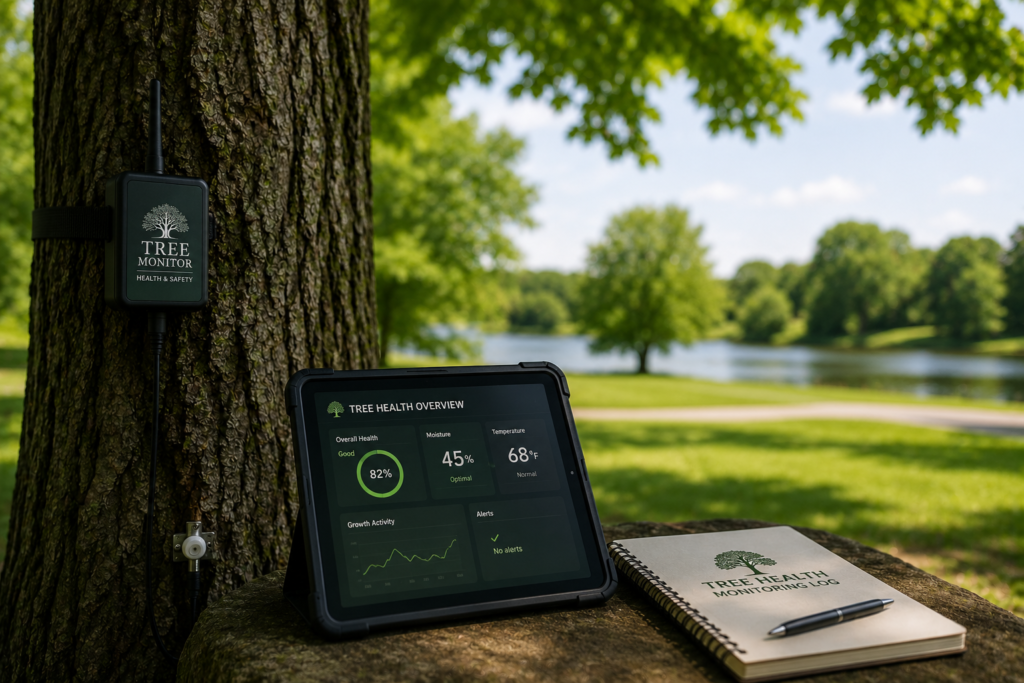
In many cases, professional arborists determine that a tree can remain safely in place through a combination of treatment, monitoring, structural pruning, or risk reduction strategies. This process is often called monitored retention, meaning the tree is preserved while its condition is regularly evaluated over time.
For property owners in Michigan, where storms, saturated soils, and aging trees create ongoing challenges, understanding when treatment or monitored retention is appropriate can save valuable trees while still protecting people and property.
The key is knowing the difference between a tree that is immediately hazardous and one that can be responsibly managed.
Why Immediate Removal Is Not Always Necessary
Many homeowners assume that visible defects automatically mean a tree is unsafe. However, tree risk assessment is more complex than appearance alone.
Professional arborists evaluate:
- Structural stability
- Species characteristics
- Root condition
- Decay progression
- Crown health
- Lean angle changes
- Target risk (homes, driveways, sidewalks, utilities)
- Storm exposure
A tree with visible defects may still have enough structural integrity to remain safely standing for years with proper management.
In fact, urban forestry research consistently shows that preserving mature trees whenever safely possible provides long-term environmental and property value benefits. Large mature trees play a major role in urban canopy protection, cooling, stormwater reduction, and overall landscape health.
What Is Monitored Retention?
Monitored retention means a tree is intentionally preserved while being observed and maintained over time rather than removed immediately.
This typically involves:
- Scheduled inspections
- Structural pruning
- Crown reduction
- Cabling or bracing
- Soil and root care
- Monitoring decay progression
- Evaluating storm response over time
The goal is not to ignore risk, it is to manage it responsibly.
This approach is especially valuable when:
- The tree has high landscape value
- The defect is manageable
- The risk target is low
- The tree still has strong biological health
Situations Where Treatment or Retention May Be Appropriate
1. Trees With Minor Structural Defects
Not every crack, cavity, or lean means a tree is failing.
Some defects are:
- Stable and compartmentalized
- Slow-moving
- Non-progressive
- Manageable through pruning and monitoring
Research on retained trees shows that structural characteristics strongly influence long-term survival and stability. Trees with better crown structure and lower stress exposure often remain viable much longer than expected.
A professional evaluation helps determine whether the defect is cosmetic, moderate, or critical.
2. Trees Recovering After Storm Damage
Michigan storms regularly leave trees with:
- Broken limbs
- Split branches
- Partial canopy loss
- Minor root disturbance
While some trees require removal after severe storms, others can recover successfully through:
- Corrective pruning
- Weight reduction
- Monitoring for delayed decline
A tree may look damaged immediately after a storm, but stabilize over time if the core structure remains intact.
3. Trees Providing Significant Shade or Landscape Value
Large mature trees offer major benefits:
- Reduced cooling costs
- Increased property value
- Improved stormwater control
- Better air quality
- Wildlife habitat
Research shows mature tree retention is critical for maintaining urban canopy health and sustainability goals. Excessive removals can dramatically reduce long-term canopy coverage.
Because of this, arborists often attempt treatment or risk mitigation before recommending removal when the situation allows.
4. Trees With Localized Decay
Decay alone does not automatically mean failure.
Trees naturally compartmentalize injuries and decay over time. Some hollow or partially decayed trees remain structurally stable for decades, depending on:
- Species type
- Decay location
- Remaining sound wood
- Crown balance
The important question is not simply “Is there decay?” but rather:
“How much structural strength remains?”
5. Low-Target Areas
Risk is always a combination of:
- The likelihood of tree failure
- The consequences if failure occurs
For example:
- A tree over a playground carries a high target risk
- A similar tree deep in wooded acreage may carry minimal risk
This is why some trees can remain safely in place even with known defects.
Common Treatment Options Used Instead of Removal
Structural Pruning
Structural pruning removes weak, damaged, or overextended limbs to reduce stress on the tree.
Benefits include:
- Reduced wind resistance
- Better weight distribution
- Lower branch failure risk
- Improved long-term structure
This is one of the most common alternatives to removal.
Crown Reduction
Instead of removing the tree entirely, arborists may reduce the canopy size to decrease mechanical stress.
This is especially helpful for:
- Trees with heavy upper crowns
- Trees near structures
- Trees with moderate decay issues
Proper crown reduction differs from harmful topping practices and should only be done professionally.
Cabling and Bracing
Support systems can help stabilize:
- Weak branch unions
- Split trunks
- Heavy lateral limbs
While not permanent solutions, these systems may extend safe retention significantly.
Soil and Root Care
Many tree problems begin underground.
Treatment may involve:
- Soil aeration
- Mulching
- Root collar excavation
- Water management
- Compaction reduction
Healthy roots greatly improve long-term stability.
When Removal Is Still the Better Option
Not every tree can or should be retained.
Removal may be necessary when:
- Structural failure risk is high
- Major root failure exists
- The tree threatens occupied structures
- Severe decay compromises load-bearing wood
- Storm damage is catastrophic
- The species has poor recovery potential
A monitored retention strategy only works when the remaining risk level is acceptable.
Why Monitoring Matters
A key part of retention is ongoing evaluation.
Trees are living structures that change continuously. A tree that is manageable today may become hazardous later due to:
- Additional storms
- Decay progression
- Root decline
- Soil movement
- Drought stress
This is why arborists recommend:
- Annual inspections
- Post-storm assessments
- Long-term maintenance plans
Monitoring allows small problems to be addressed before they become dangerous.
The Risk of Overreacting to Tree Defects
One challenge in tree care is balancing safety with unnecessary removals.
Online discussions among arborists and property owners often highlight how different professionals may recommend very different approaches for the same tree. Some experts advocate preservation with monitoring, while others recommend immediate removal depending on risk tolerance and site conditions.
This reinforces an important point:
Tree risk assessment is rarely black and white.
Good arboriculture focuses on:
- Evidence-based evaluation
- Realistic risk management
- Long-term tree health
- Site-specific conditions
Why Professional Assessment Matters
DIY tree evaluations can be misleading because many structural issues are internal or underground.
Professional arborists evaluate:
- Load distribution
- Decay extent
- Species-specific failure patterns
- Soil stability
- Storm exposure
- Root health
- Crown balance
Companies like Tree Solutions LLC understand that removal is not always the first answer. In many cases, preserving a tree safely through monitoring and treatment provides the best long-term outcome for both the property and the landscape.
Final Thoughts
Tree removal is sometimes necessary, but it should not always be the automatic response to visible defects or storm damage.
Many trees can continue to thrive safely for years through:
- Structural pruning
- Crown management
- Monitoring programs
- Root and soil treatment
- Professional risk assessment
For Michigan homeowners dealing with aging trees, storm impacts, or uncertain tree conditions, monitored retention can be a practical and responsible alternative when guided by experienced professionals.
The goal is not simply to remove risk at all costs.
The goal is to manage trees intelligently, preserving a healthy canopy whenever it can be done safely and responsibly.