
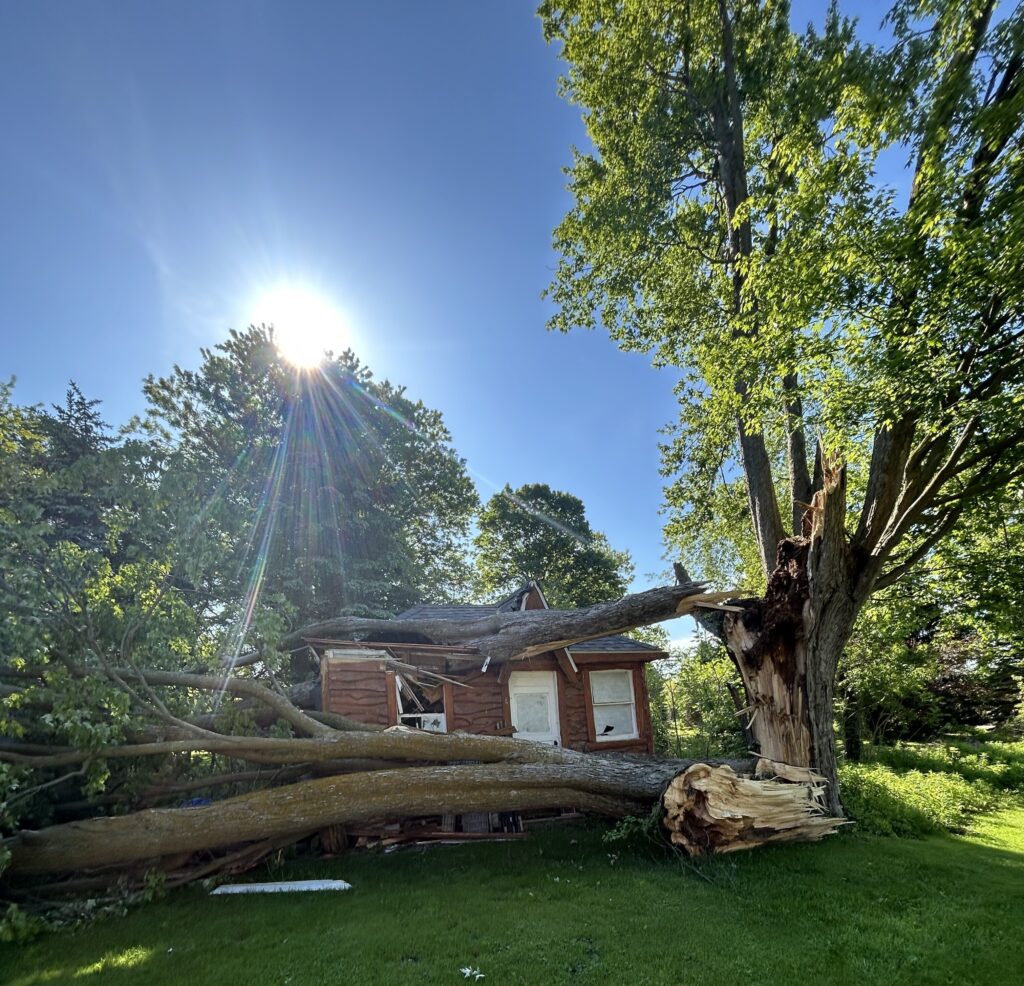
Michigan’s recent wave of severe thunderstorms has left behind a familiar but dangerous sight, fallen trees scattered across roads, yards, and neighborhoods. At first glance, most homeowners see cleanup work. But what many don’t realize is that storm-damaged trees are often far more dangerous after the storm than during it.
In recent storm events across Michigan, powerful wind systems caused widespread tree failure and significant power outages across multiple counties. Severe thunderstorm warnings repeatedly highlighted the risk of falling trees and flying debris as one of the top hazards.
While the storm may pass in minutes, the danger left behind can last for days or even months.
This is why fallen trees should never be treated as harmless debris.
Michigan’s Recent Storm Pattern: Why Tree Damage Is Increasing
Michigan has seen a consistent rise in strong wind events, saturated soil conditions, and fast-moving storm systems in recent years. The combination of these factors makes trees more vulnerable than many homeowners expect.
Recent storm reports from mid-2026 show:
- Widespread wind gusts reaching 60–80 mph
- Multiple severe thunderstorm warnings across Lower Michigan
- Tornado confirmations in parts of Mid-Michigan
- Extensive tree and power line damage across residential areas
One major factor is soil saturation. After repeated heavy rain events, roots lose stability, making even healthy-looking trees easier to uproot. This leads to sudden tree falls during wind gusts, often without warning.
Why Fallen Trees Are More Dangerous Than Standing Storm Damage
A fallen tree might look harmless once it hits the ground, but in reality, it can become unstable, unpredictable, and structurally dangerous.
Here’s why:
1. Trees Are Still Under Tension
When a tree falls, it rarely lands in a relaxed state. Instead, branches and trunks often remain under extreme mechanical stress.
This means:
- Logs can snap suddenly when cut
- Branches can whip back unexpectedly
- Sections of the tree can roll or shift without warning
This “stored energy” is one of the biggest hidden dangers after storms.
2. Root Wads Can Tip Without Warning
Uprooted trees often bring a massive root ball with them. These root structures are extremely heavy and unstable.
Even after the storm:
- The root plate can slowly shift
- Soil erosion can destabilize the base
- Gravity can cause delayed collapse hours or days later
This is especially dangerous in Michigan, where wet spring soil conditions are common.
3. Hanging Limbs (“Widow Makers”)
One of the most dangerous post-storm hazards is hanging branches caught in other trees.
These limbs:
- Can fall at any time
- Are often hidden above eye level
- Frequently weigh hundreds of pounds
Even a light breeze or vibration can trigger collapse.
Forestry experts often refer to them as “widow makers” because of how unpredictable they are.
4. Trees Near Power Lines Create Secondary Hazards
Recent Michigan storms caused widespread power line damage due to falling trees and branches.
Downed or leaning trees near live wires create:
- Electrocution risks
- Fire hazards
- Road blockages
- Delayed emergency response access
This is why officials repeatedly warn residents to stay at least 25 feet away from downed lines during cleanup efforts
5.Partially Uprooted Trees Can Still Fall Later
A tree that is still standing after a storm is not necessarily stable.
Many trees suffer:
- Root tearing
- Internal trunk fractures
- Soil displacement
These trees may look fine initially, but can collapse days or weeks later, especially during the next rain or wind event.
Real Michigan Storm Damage Shows the Pattern
Recent storms across Michigan in April 2026 provide clear examples of how widespread tree damage becomes a long-term hazard:
- Multiple communities reported widespread downed trees and power lines after severe wind gusts
- Ice arenas, homes, and public structures were damaged by falling trees and debris
- National Weather Service crews confirmed that many damaged trees were caused by straight-line winds and tornado-producing storm systems
In many neighborhoods, cleanup crews reported that trees which initially appeared stable later shifted or collapsed during removal efforts.
Why DIY Cleanup After Storms Is So Risky
After a storm, many homeowners feel pressure to clean up quickly. However, post-storm tree work is one of the most dangerous types of DIY outdoor activity.
Common risks include:
1. Chainsaw Injuries
Storm-damaged wood is unpredictable. A single wrong cut can cause:
- Kickback injuries
- Deep lacerations
- Loss of control due to shifting wood
This aligns with broader chainsaw injury patterns, which show thousands of emergency room visits annually linked to improper use.
2. Falling Branches During Cleanup
Even while cutting, overhead branches can fall unexpectedly due to vibration or wind movement.
3. Hidden Structural Weakness
Storm damage is not always visible. Internal cracks and split trunks can make trees fail suddenly during removal.
4. Electrical Hazards
Trees entangled with power lines are especially dangerous. Many post-storm injuries occur when homeowners unknowingly approach energized lines.
Why Storm-Damaged Trees Require Professional Assessment
Not every fallen tree needs immediate removal, but every damaged tree needs evaluation.
Professional arborists look for:
- Root stability
- Internal trunk fractures
- Lean angle changes
- Soil displacement
- Hanging limb risks
- Proximity to structures and utilities
This assessment determines whether a tree can be saved or must be removed safely.
Companies like Tree Solutions LLC specialize in storm response work, where safety is the priority, not speed. Proper equipment, training, and hazard assessment reduce the risk of secondary accidents during cleanup.
Hidden Long-Term Risks Homeowners Often Miss
Even after cleanup, storm-damaged trees can continue to pose risks:
Delayed Tree Failure
A tree weakened during a storm may fall weeks later during normal weather conditions.
Disease and Decay
Open wounds from broken limbs allow fungi and insects to enter, weakening the tree further.
Soil Instability
Once roots are disturbed, surrounding trees may also become unstable over time.
How to Stay Safe After a Storm
If your property has storm damage, follow these key safety steps:
- Never approach downed power lines
- Avoid cutting large fallen trees without training
- Do not stand under hanging branches
- Keep children and pets away from damaged areas
- Call professionals for large or leaning trees
- Inspect trees near structures carefully over time
Final Thoughts
Fallen trees in Michigan may look like simple cleanup jobs after a storm, but they often hide serious structural dangers. Between unstable root systems, hidden internal damage, and unpredictable branch tension, these trees can become more dangerous after the storm than during it.
Recent severe weather across Michigan has shown just how quickly wind events can turn healthy trees into long-term hazards. And while the storm may last minutes, the risk it leaves behind can last for weeks.
The safest approach is simple: treat every storm-damaged tree as unstable until it is professionally assessed.
Because in storm recovery, what you see on the ground is never the full story.