
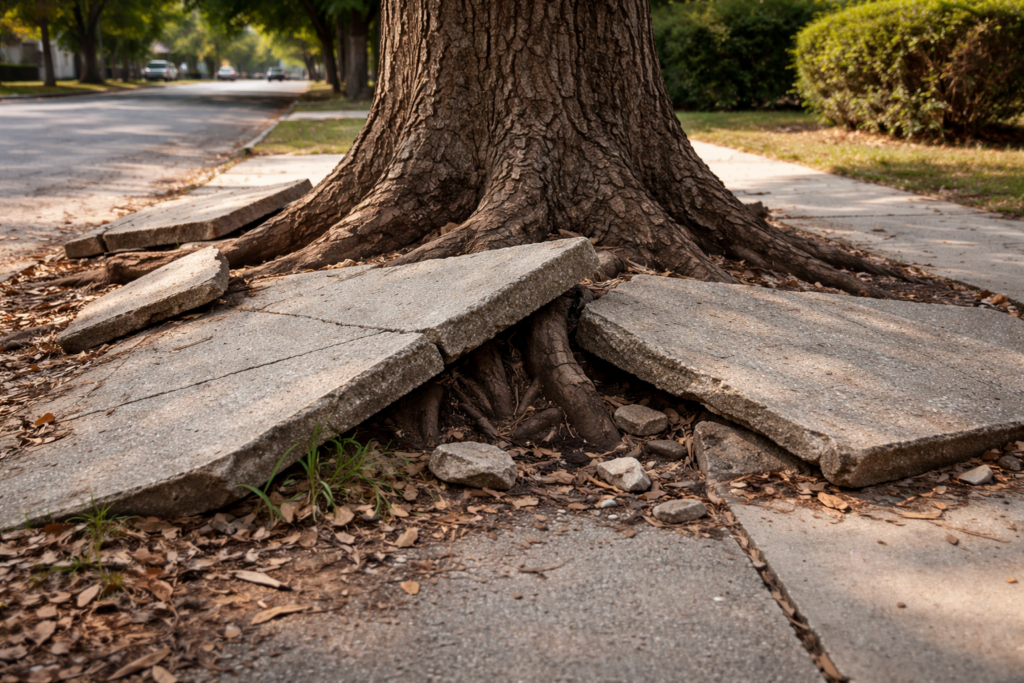
When homeowners spot a crack in their driveway, sidewalk, or patio, a common culprit quickly comes to mind: tree roots. We’ve all seen nature’s quiet persistence, tiny seedlings pushing through gravel, vines gripping brick walls, or grass splitting pavement. But can tree roots truly crack concrete, or is that just a myth homeowners share on forums and neighborhood chats?
The short answer: Yes, but not in the dramatic way many people imagine. Tree roots usually don’t “smash” concrete with brute force, like a jackhammer. Instead, they cause damage gradually through pressure, soil shifts, and clever exploitation of weak spots. Understanding how this happens is key to protecting your property and ensuring your trees and concrete structures coexist safely.
Let’s break down the science, the myths, and what actually goes on beneath the surface.
1. What Tree Roots Really Do Beneath the Ground
To understand how roots affect concrete, it helps to know how they grow.
Unlike what many homeowners think, roots don’t actively “seek to destroy” pavement or foundations. Instead, roots grow to find:
- Water
- Oxygen
- Nutrients
Roots tend to spread laterally, especially in the top layers of soil where moisture and air are most available. A mature tree’s root system can spread two to three times wider than its canopy and continuously expands each year as the tree matures.
And the important part, roots are exceptionally good at filling any available space. If a concrete slab is nearby, roots don’t try to “break” it intentionally, but they will exploit weaknesses, cracks, or gaps and continue growing through them.
2. So How Do Roots “Crack” Concrete?
Concrete seems solid, until it isn’t.
A. They Exploit Tiny Cracks
Concrete slabs, sidewalks, driveways, and patios can develop very small hairline cracks over time due to weather, freeze-thaw cycles, soil settling, compressive forces, or minor construction imperfections. Roots are opportunists; they will grow into even the tiniest openings and widen them as they grow.
This isn’t roots shattering concrete, but rather mechanical wedging; roots grow in size and put continuous outward pressure that gradually turns a hairline crack into a more serious fissure.
B. They Push Up the Surface
In many cases, roots growing just beneath the surface begin to exert upward pressure on concrete slabs, lifting them unevenly. Sidewalks and slabs aren’t flexible; they can’t accommodate upward displacement easily. So even relatively slow root growth can lead to:
- Cracked panels
- Buckled joints
- Uneven, trip-hazard surfaces
This lifting action can feel like concrete is “breaking,” but what’s really happening is that the roots are applying slow, persistent pressure until the rigid slab yields.
C. Soil Displacement and Settlement
Another subtle force at play is soil movement beneath the slab.
Roots can change moisture levels in the soil, creating dry pockets or expanding wet soil in clay-rich ground. These soil changes can cause the ground under concrete to shift and settle unevenly, leading to cracks that might not have occurred otherwise.
So in this case, the concrete “cracks” not because roots force their way through it, but because the ground beneath shifts around them.
Don’t forget to check out: What Is the Best Equipment to Remove Stumps?
3. Different Scenarios: Sidewalks vs. Foundations
Sidewalks, Driveways, and Patios
These surfaces are typically thinner and less reinforced than a home’s foundation. They’re especially vulnerable because:
- They’re closer to the soil surface (where roots grow)
- They often lack deep support
- Temperature changes and soil shifts affect them more
As roots expand under these slabs, they push from below, causing:
- Uneven lifting of panels
- Cracks radiating outward
- Shifting joints in long concrete runs
Over the years, these changes can make sidewalks unsafe or driveways uncomfortable to walk or drive on.
House Foundations
Many homeowners worry most about their foundation. Here’s what research and concrete experts generally agree on:
- Tree roots rarely grow through intact concrete foundation walls on their own.
- However, if there are pre-existing cracks, voids, or leaks, roots may exploit those openings and widen them over time.
- More commonly, foundation damage is a result of soil moisture changes caused by nearby roots; this can lead to settlement, cracking, or shifting without roots ever directly penetrating the concrete.
So while roots may not literally “crack your foundation by brute force,” their indirect effect on soil and structure can definitely contribute to serious problems if not managed properly.
4. Which Tree Roots Are Most Likely to Cause Trouble?
Not all trees pose the same risk to nearby concrete.
Species with wide-spreading, vigorous root systems are more likely to cause concrete issues over time. Trees often associated with invasive or aggressive roots include:
- Silver Maple
- Poplar
- Willow
- Elm
- Certain Oak varieties
These trees can have shallow, fast-growing roots that spread far beyond the tree’s drip line and are more likely to interact with pavements or slabs.
That doesn’t mean every tree will cause damage; location, soil type, and planting distance matter just as much or more than species alone.
5. Factors That Make Root Damage Worse
Some conditions dramatically increase the likelihood of concrete issues:
Soil Type
- Clay soils expand and contract significantly with moisture changes, enhancing stress on slabs.
- Compacted fill soils under sidewalks can limit root depth, forcing roots to spread sideways.
Moisture Conditions
Areas with irregular moisture, dry spells followed by heavy rain, can lead to shrinking and swelling soils. Roots intensify that cycle by absorbing water and altering soil structure.
Construction Quality
If a slab is improperly poured, lacks adequate reinforcement, or sits on poorly prepared base materials, it becomes much easier for roots to cause long-term issues.
6. So What’s the Bottom Line?
Here’s how you can sum it up:
- Roots don’t act like demolition tools. They don’t smash concrete through brute strength.
- Concrete isn’t indestructible. It cracks and shifts due to temperature, soil change, and mechanical pressure.
- Roots exploit weaknesses. They find cracks or gaps and make them worse over time.
- Soil movement plays a big role. Roots can indirectly crack concrete by changing the ground beneath it.
This combination of forces, root expansion, soil displacement, and existing structural weaknesses, is what causes the cracks and lifting homeowners notice.
7. What Homeowners Can Do
Understanding the problem is the first step, but what about solutions?
Here are practical tips to protect both your trees and your property:
A. Plant Thoughtfully
Always plant new trees far enough from concrete slabs and foundations. A general rule of thumb is to plant trees at least as far away as their expected mature height.
B. Use Root Barriers
Installing underground root barriers can redirect roots deeper or away from paved surfaces before they cause problems. Professional installation ensures they’re effective long-term.
C. Regular Inspection
Keep an eye on sidewalks, driveways, patios, and foundation walls for early signs of movement or cracking. Early action can prevent larger repair costs later.
D. Professional Assessment
If you suspect significant root interference, a certified arborist or foundation expert can evaluate whether roots, soil movement, or other factors are contributing to the damage. In cases where a tree has become dangerously unstable and threatens to collapse onto your home or driveway, calling an emergency tree service is the fastest way to mitigate the risk and prevent further structural damage.
Final Thoughts
Can tree roots crack concrete? Yes, but usually indirectly. Roots grow, expand, and exploit weaknesses in the soil and concrete. Over time, this leads to cracks, lifting, and displacement that can be serious if ignored.
Trees provide beauty, shade, ecological benefits, and even value to your property. But when planted too close to foundations, sidewalks, or driveways without proper planning, their roots can become a slow-motion structural challenge.
With smart landscape planning, regular monitoring, and professional guidance when needed, you can enjoy the benefits of healthy trees without sacrificing the integrity of your concrete surfaces.
If concrete cracking or lifting is a concern on your property, scheduling a professional evaluation is a smart next step; it protects not just your hardscape but your investment in your home.
Don’t forget to check out our business profile: Tree Solutions LLC