
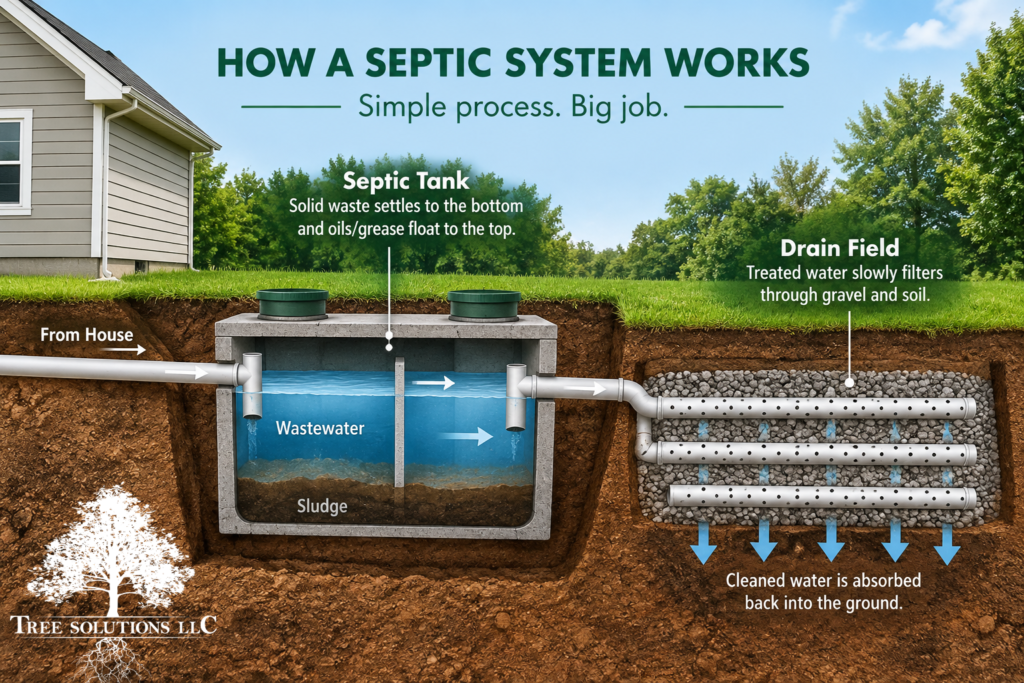
Trees and septic systems can coexist on the same property, but their locations matter more than many homeowners realize. A tree may look perfectly healthy above ground while its roots are spreading beneath the soil toward moisture and nutrients. If those roots reach septic pipes or the drainfield, they can create problems that are difficult to see until the system starts showing signs of trouble.
For Michigan homeowners, this is particularly important because septic systems are common in areas without access to municipal sewer systems. Michigan’s Department of Environment, Great Lakes, and Energy (EGLE) warns about poor landscaping near septic systems.
It says roots can enter pipes and clog sewer lines and soil pores. EGLE identifies root infiltration as one of the leading causes of septic system failure in Michigan.
So, can tree roots damage a septic system?
Yes, but the problem is usually more complicated than roots simply breaking through an otherwise perfect pipe.
How Tree Roots Get Into Septic Systems
Tree roots naturally grow toward areas where water and nutrients are available. Septic systems create conditions that can attract roots because wastewater is being distributed through pipes and into the surrounding soil.
Roots typically enter through existing weak points in underground infrastructure. Research in the Journal of Infrastructure Systems found root intrusion is more common in older sewer systems.
It is also more likely in cracked pipes, weak joints, shallow installs, and other vulnerable areas. Fast-growing tree species can also increase the risk.
Once a small root enters a pipe through a crack or joint, it can continue growing. Additional roots may follow, gradually creating an obstruction that restricts wastewater flow.
This is why a tree growing near a septic system should not automatically be blamed when a problem appears. The condition of the pipes, age of the system, soil, tree species, and location all matter.
The Drainfield Is Especially Important
Many homeowners think primarily about the septic tank, but the drainfield is just as important to the system’s operation.
After wastewater leaves the septic tank, it moves into the drainfield, where it is distributed into the soil. The soil provides additional treatment before the water eventually moves into the groundwater system.
Michigan EGLE explains that a properly functioning drainfield relies on suitable soil conditions to treat wastewater. If the drainfield becomes damaged or its soil pores become clogged, the system may no longer function correctly.
This is why landscaping decisions around a drainfield deserve attention.
The U.S. Environmental Protection Agency recommends keeping trees a safe distance from the drainfield. Tree and shrub roots can grow into drainfield pipes and damage them.
Which Trees Can Be a Concern?
Not every tree presents the same level of risk.
Michigan EGLE recommends keeping trees away from septic systems. It notes that large trees may need extra distance. This is due to expansive or water-seeking roots. Examples include maple, walnut, cottonwood, aspen, and willow. The agency recommends considering the mature tree’s dripline when determining how far it should be from the drainfield.
That is an important distinction for homeowners.
A small tree planted several feet away may look harmless today, but its mature root system can extend considerably farther over time. The size of the tree when you plant it is not necessarily an accurate representation of where its roots will eventually grow.
Michigan State University Extension similarly advises homeowners to consider the mature root zone of trees and shrubs when planning vegetation around septic systems.
Signs Tree Roots May Be Affecting Your Septic System
Root intrusion is usually an underground problem, so you may not see the roots themselves.
Instead, homeowners may notice changes in how the septic system operates.
Michigan EGLE lists warning signs of septic system failure. These include slow drains and sewage or wastewater backing up into the home. Other signs include gurgling plumbing. You may also see standing water or unusually wet areas near the tank or drainfield. Grass may look unusually lush or feel spongy. You may also notice sewage odors.
These symptoms do not automatically mean tree roots are responsible. A septic professional should determine the actual cause.
However, if a large tree is growing directly beside or over the septic system and you are also experiencing drainage problems, root intrusion is worth investigating.
Can Roots Damage the Drainfield Pipes?
Yes, the EPA specifically warns that tree and shrub roots can ensnare and damage drainfield pipes.
Research into root intrusion also shows that the condition of the underground pipes plays an important role. A 2017 study in Urban Forestry & Urban Greening used CCTV inspections to examine root intrusion.
It found that pipe defects and environmental factors affect the risk of root intrusion and blockage.
More recent research has continued to examine how tree species, pipe conditions, soil, and environmental characteristics influence the risk of root-related blockages.
The takeaway for homeowners is that tree removal should not be the first assumption every time a septic problem appears. The source of the problem needs to be identified first.
What If a Tree Is Already Growing Too Close?
This is where professional tree care becomes important.
If you have a mature tree growing directly over or beside a septic tank, drainfield, or underground septic lines, don’t start digging around its roots to investigate the situation yourself. Cutting major roots can destabilize a tree and potentially create a completely different safety problem.
Instead, the tree and septic system should be considered together.
A septic professional can help identify the location and condition of the system, while a professional tree service can assess the tree’s size, structure, root-zone considerations, and potential risk.
In some situations, the best solution may be continued monitoring or appropriate tree maintenance. In others, removing a tree that poses an ongoing risk to the septic system may be the safer long-term decision.
Should You Remove a Tree Near a Septic System?
Not necessarily, the fact that a tree is near a septic system doesn’t automatically mean it needs to be removed. Trees provide shade, wildlife habitat, carbon storage, and other environmental benefits.
The decision should depend on factors such as the tree’s species, age, size, distance from the septic components, root characteristics, condition of the underground system, and potential consequences if root intrusion occurs.
Michigan EGLE’s guidance is preventative: keep trees and large shrubs sufficiently separated from the septic system rather than waiting until roots have already entered the system. Once significant root intrusion occurs, EGLE notes that remediation can be difficult and major repairs or system replacement may sometimes become necessary.
That makes early evaluation much more valuable than waiting for a septic failure.
What About an Existing Tree on the Drainfield?
If a tree is already growing over the drainfield, avoid disturbing the area until you understand exactly where the septic components are located.
Michigan EGLE recommends keeping the septic system site free from trees and other woody vegetation because roots can infiltrate and damage or clog system components.
The appropriate next step is to have the situation assessed.
If removal is necessary, professional tree removal is particularly important because working around a septic system requires care. Heavy equipment, uncontrolled falling limbs, or unnecessary excavation can damage underground components or compact the soil around the drainfield.
The goal is to remove the tree while protecting the septic infrastructure underneath.
Why Professional Tree Removal Matters Around Septic Systems
Removing a tree near a septic system is different from removing one in an open section of lawn.
Before work begins, the location of the septic tank, drainfield, pipes, and other components should be understood as clearly as possible. The tree’s size and structure also need to be considered so that branches and trunk sections can be controlled during removal.
This is one reason homeowners should not simply cut down a large tree and worry about the underground consequences afterward.
At Tree Solutions LLC, the focus is on assessing the tree and surrounding property before determining the appropriate approach. If a tree needs to be removed because of its location, condition, or potential risk to your septic system, professional removal can help address the above-ground hazard without unnecessarily disturbing the property.
Protect Your Septic System Before Problems Start
The best time to think about tree roots and septic systems is before there is a blockage or failure.
Know where your septic tank and drainfield are located. Keep heavy equipment and vehicles away from the drainfield, maintain the system according to your septic professional’s recommendations, and think about mature root growth before planting trees nearby.
Michigan EGLE recommends yearly septic-system inspections that include checking the drainfield for signs of failure.
If a mature tree is already growing close to the system, don’t wait until sewage is backing up into the house before addressing the potential risk.
Final Thoughts
Tree roots can damage septic systems, particularly when roots reach vulnerable pipes, joints, or other components. The risk depends on more than simply how close the trunk is to the septic system. Tree species, root characteristics, pipe condition, soil, and the location of the septic components all play a role.
For Michigan homeowners, prevention is far easier than dealing with a damaged drainfield or major septic repair.
If a large tree grows over or near your septic system, Tree Solutions LLC can assess it. We will recommend trimming, removal, or another suitable option. Taking care of the tree before it becomes a structural or septic-system hazard can help protect both your property and the expensive infrastructure beneath it.