
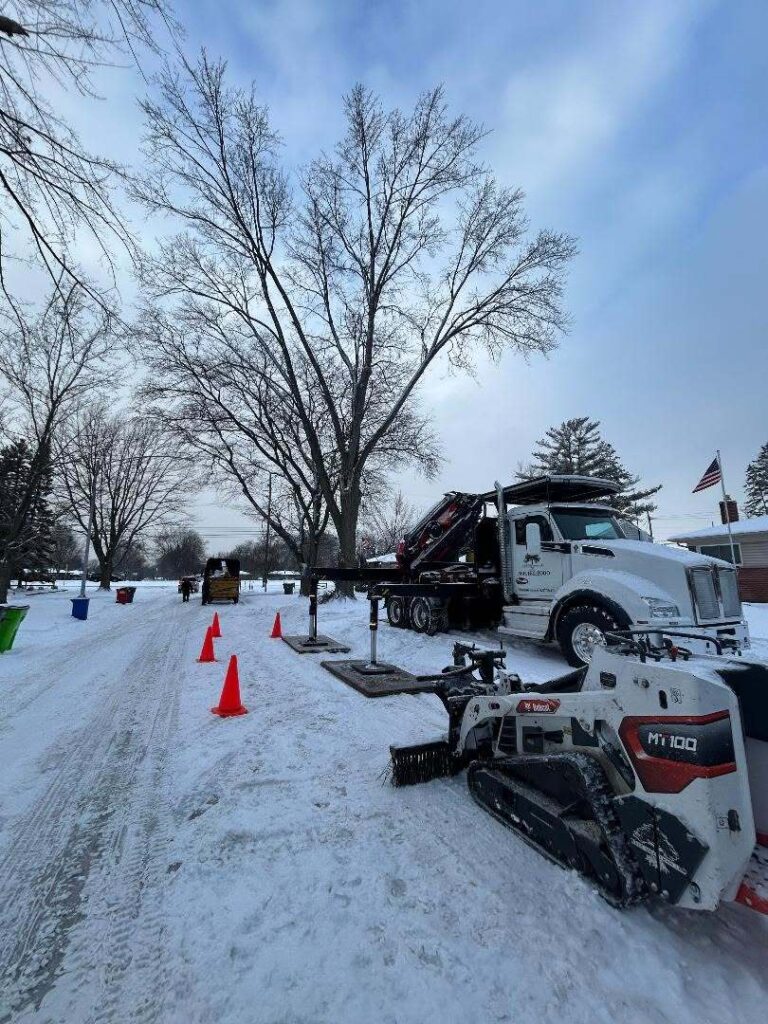
Michigan winters can put considerable stress on residential trees. Heavy snow, freezing rain, strong winds, and fluctuating temperatures can break branches, damage trunks, and sometimes uproot entire trees. For homeowners in Macomb and Oakland Counties, preparing trees before severe winter weather can reduce property damage. It can also help you spot hazards before they become emergencies.
The best time to prepare is before a major storm is in the forecast. Inspecting trees, addressing weak branches, and arranging professional tree care when needed can make a meaningful difference in how your landscape withstands winter conditions.
Why Winter Storms Are Dangerous for Trees
Winter weather affects trees in several ways. Snow accumulates on branches, freezing rain adds weight to the canopy, and strong winds place additional stress on trunks and root systems. When these forces act on a tree with existing structural weaknesses, branches may break, or the entire tree may fail.
According to Michigan State University Extension, ice accumulation can cause significant crown breakage, split trunks, and the loss of major limbs. Even a relatively thin layer of ice can add substantial weight to branches.
A USDA Forest Service review of research on hardwood trees also documents how ice storms can cause extensive crown damage and influence tree recovery over time. The extent of damage depends on factors such as tree species, branch structure, storm severity, and the condition of the tree before the event.
Not every tree will suffer damage during a winter storm. However, trees with dead branches, weak attachments, trunk cracks, or compromised roots may be more vulnerable.
Inspect Your Trees Before Winter Arrives
A visual inspection is a useful starting point when preparing your property for winter. Look for dead or broken branches, cracks where large limbs connect to the trunk, cavities, and branches extending over your roof, driveway, or other frequently used areas.
Pay attention to changes in the tree’s position as well. A tree that has recently developed a lean, especially when accompanied by raised soil around its base, may have a problem with root stability.
Also consider the tree’s surroundings. Branches growing close to a house, garage, fence, or parked vehicle may create a greater risk of property damage if they break during a storm.
Some defects are difficult to identify from the ground, particularly when internal decay or root damage is involved. If a mature tree has visible structural problems or appears unstable, a qualified tree care professional can assess its condition and determine whether trimming or removal is appropriate.
Remove Weak and Hazardous Branches Before Heavy Snow
One of the most practical ways to prepare trees for winter is to address branches that are already dead, damaged, or poorly attached.
Dead branches no longer receive the resources needed to maintain living tissue and can become brittle over time. Weak branch unions and existing cracks can also become failure points when snow or ice adds weight to the canopy.
Professional tree trimming and pruning can remove selected problem branches while preserving the tree’s healthy structure. The objective is not to cut away as much growth as possible. Excessive pruning can stress trees and create unnecessary wounds, so cuts should be based on the tree’s condition and structure.
Michigan State University Extension recommends using a professional tree service when storm damage presents risks or when homeowners are uncertain about how to handle the work.
Avoid climbing trees or using ladders and chainsaws to remove large overhead branches. A branch under tension can move unexpectedly when cut, and even a small mistake can result in serious injury or property damage.
Pay Attention to Trees Near Your Home and Power Lines
Trees growing near buildings deserve particular attention before winter storms. A large branch that breaks over a roof can damage shingles, gutters, windows, and other structures. If an entire tree fails, the consequences can be considerably more serious.
Look for branches extending over the roof or hanging above areas where vehicles are parked. Trees with major cracks, significant decay, or a sudden lean may also require professional assessment before severe weather arrives.
Trees near electrical lines present a different hazard. Never attempt to trim branches touching or approaching power lines yourself. Contact the utility provider or a qualified professional authorized to work around electrical infrastructure.
Tree Solutions LLC provides tree trimming, hazardous tree removal, and crane-assisted removal services for properties across Macomb and Oakland Counties. Professional equipment and controlled removal methods are especially important when large trees are positioned close to homes, garages, or other obstacles.
Protect Trees From Snow and Ice Damage
Homeowners sometimes try to remove snow from branches themselves, but the method matters. The weight of wet snow and accumulated ice can put significant stress on limbs, and shaking or striking branches may cause additional breakage.
For small ornamental trees, gently brushing away loose snow with an upward motion may help, provided the branches are within safe reach. Do not shake frozen branches or attempt to knock ice off them. Avoid working beneath heavily loaded limbs.
Large trees and high branches require a different approach. If a branch is bent sharply, cracked, or partially detached, keep people away from the area and arrange professional assistance.
Ice-covered trees should generally be left alone until the ice melts, unless an immediate hazard requires emergency intervention by trained professionals.
Check the Root Area and Surrounding Soil
A tree’s stability depends on more than its trunk and branches. Its root system anchors it in the soil, and conditions around the roots can affect how well it withstands strong winds.
Prolonged rain, saturated ground, construction-related root damage, and soil disturbance can compromise stability. When winter storms bring strong winds, an already weakened root system may increase the risk of a tree leaning or uprooting.
Before winter, look for exposed or damaged roots, fresh soil cracks, and changes in the ground around the trunk. These signs do not necessarily mean a tree will fall, but they should not be ignored.
Avoid digging near major roots or compacting the soil around trees unnecessarily. If a tree has developed a new lean or the soil around its base has shifted, seek professional assessment rather than trying to stabilize it yourself.
Know When a Tree Needs Professional Removal
Trimming can resolve some tree hazards, but it is not always enough. A tree with extensive structural decay, severe trunk damage, major root failure, or an unstable position may require removal.
Waiting until a winter storm is approaching can make the situation more difficult. Once a tree has split or partially fallen, removal may involve unstable wood, suspended branches, and limited working space around nearby structures.
Professional hazardous tree removal allows the work to be planned around the tree’s condition and the surrounding property. For large trees in confined spaces, specialized equipment such as a crane may be needed to remove sections in a controlled manner.
If a tree is already leaning dangerously, has split at the trunk, or has large hanging limbs, keep people away from the potential fall area. Do not attempt to cut or pull down the damaged sections yourself.
After a storm, the same precautions apply. A tree that remains standing may still have hidden structural damage, so a professional assessment can help determine whether further work is necessary.
Prepare Your Property With Tree Solutions LLC
Preparing trees for Michigan’s winter storms starts with identifying hazards before snow, ice, and strong winds arrive. Inspecting mature trees, addressing weak branches, and taking structural problems seriously can help reduce the risk of storm-related damage.
If you have a tree with dead limbs, visible cracks, a new lean, or branches extending over your home, arrange professional tree care before winter weather makes the situation more difficult.
Tree Solutions LLC offers expert tree trimming and pruning services. We also provide hazardous tree removal, storm damage cleanup, and emergency tree removal. We serve Macomb and Oakland Counties in Michigan.
Whether a tree needs selective pruning before winter or removal because it presents a safety concern, Tree Solutions LLC can help you determine the appropriate service for your property. Contact the team before severe weather arrives to discuss your tree care needs and protect your property against avoidable winter hazards.