
Trees are among the most valuable assets on any property. They provide shade, improve curb appeal, increase property value, reduce storm water runoff, and contribute to healthier communities. But when a tree becomes structurally compromised, diseased, or storm-damaged, it can quickly shift from an asset to a liability.
This is where hazard tree assessment becomes critical.
Not every leaning tree is dangerous, and not every healthy-looking tree is safe. Determining whether a tree poses a risk requires specialized knowledge, training, and experience. That is why ISA certification is so important.
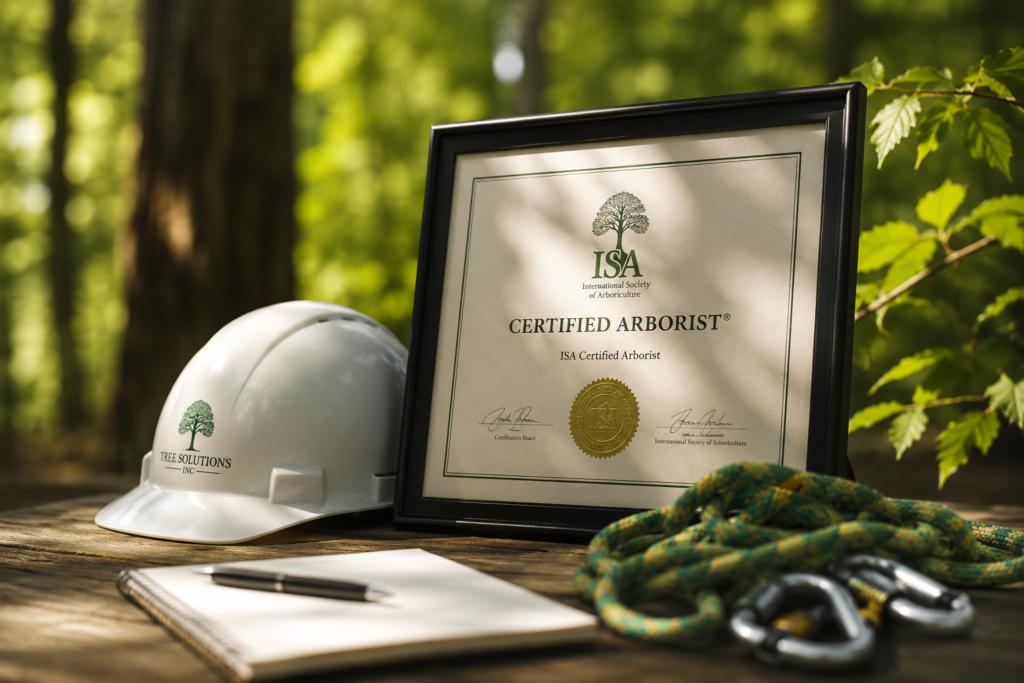
The International Society of Arboriculture (ISA) is one of the most respected organizations in the tree care industry. ISA Certified Arborists undergo extensive training and testing to evaluate tree health, structural integrity, risk factors, and management options. Their expertise helps property owners make informed decisions that prioritize both safety and tree preservation.
For homeowners and property managers in Michigan, where severe storms, heavy snow, strong winds, and aging tree populations create unique challenges, working with ISA-certified professionals can make the difference between proactive risk management and costly property damage.
What Is Hazard Tree Assessment?
Hazard tree assessment is the process of evaluating whether a tree poses an unacceptable risk to people, structures, vehicles, utilities, or other targets.
A hazard assessment looks beyond surface appearance and examines:
- Tree species characteristics
- Structural defects
- Root stability
- Decay progression
- Storm damage
- Branch attachment strength
- Soil conditions
- Target occupancy and exposure
- Overall tree health
The goal is not simply to determine whether a tree should be removed. Instead, the objective is to understand the level of risk and identify the most appropriate management strategy.
In many cases, the solution may involve pruning, monitoring, cabling, or other treatments rather than removal.
Understanding the Difference Between a Tree Defect and a Tree Hazard
One of the biggest misconceptions among property owners is that any visible defect automatically means a tree is dangerous.
In reality, arborists distinguish between:
Tree Defects
These are structural issues or abnormalities such as:
- Cracks
- Cavities
- Dead branches
- Leaning trunks
- Included bark
- Root damage
Tree Hazards
A hazard exists when there is both:
- A likelihood of failure
- A target that could be damaged if failure occurs
For example:
- A hollow tree deep within a wooded area may present very little risk.
- The same tree overhanging a home or driveway may represent a significant hazard.
ISA-certified arborists are trained to evaluate both the defect and the surrounding environment before making recommendations.
What Does ISA Certification Mean?
The International Society of Arboriculture established its certification program to create consistent professional standards throughout the tree care industry.
To become certified, arborists must:
- Meet industry experience requirements
- Pass a comprehensive examination
- Demonstrate knowledge of tree biology
- Understand tree risk assessment principles
- Maintain continuing education requirements
- Stay current with evolving industry standards
Certification is not a one-time achievement. ISA Certified Arborists must continually update their knowledge through ongoing professional development.
This commitment to education is especially important because tree science continues to evolve as researchers learn more about tree biomechanics, decay processes, and risk assessment techniques.
Why Hazard Tree Assessment Requires Specialized Knowledge
Trees are living organisms that constantly adapt to their environment.
Unlike buildings or utility poles, trees:
- Grow continuously
- Respond to stress
- Develop adaptive structures
- Compartmentalize injuries
- Change over time
Because of this complexity, hazard assessment involves much more than visual observation.
An ISA-certified arborist understands:
Tree Biology
Understanding how trees grow and respond to injury helps determine whether defects are stable or progressing.
Species Characteristics
Different species have different failure patterns.
For example:
- Some species tolerate decay exceptionally well.
- Others become structurally compromised much sooner.
Decay Recognition
Internal decay is often hidden from view.
Certified arborists know how to identify indicators of:
- Advanced decay
- Root deterioration
- Fungal infections
- Structural weakness
Biomechanics
Tree biomechanics examines how trees respond to:
- Wind loading
- Snow loads
- Gravity
- Structural stress
This knowledge is critical when evaluating whether a tree can withstand future weather events.
Michigan’s Weather Makes Professional Assessments Even More Important
Michigan experiences a wide range of environmental conditions that can affect tree stability.
These include:
Severe Thunderstorms
High winds frequently cause:
- Limb failures
- Trunk fractures
- Uprooted trees
Heavy Snow and Ice
Winter weather places tremendous stress on branches and can expose pre-existing structural weaknesses.
Saturated Soils
Spring rainfall often softens the soil, reducing root stability and increasing the likelihood of uprooting.
Repeated Freeze-Thaw Cycles
Temperature fluctuations can worsen existing cracks and structural defects over time.
Because Michigan trees face these ongoing environmental pressures, regular hazard assessments are particularly valuable.
Why Misdiagnosing a Tree Can Be Costly
Poor tree assessments can create serious consequences.
Unnecessary Tree Removal
Removing a mature tree that could have been safely retained can result in:
- Reduced property value
- Loss of shade
- Increased cooling costs
- Reduced environmental benefits
Failure to Address Genuine Hazards
Conversely, underestimating risk can lead to:
- Property damage
- Vehicle damage
- Utility disruptions
- Personal injury
Professional assessment helps avoid both extremes.
The Tree Risk Assessment Process
ISA-certified arborists follow a systematic approach when evaluating tree risk.
Step 1: Site Inspection
The arborist evaluates:
- Tree location
- Nearby structures
- Utility lines
- Pedestrian traffic
- Property use patterns
Step 2: Tree Evaluation
The tree itself is examined for:
- Deadwood
- Decay
- Cracks
- Cavities
- Root problems
- Leaning
- Canopy condition
Step 3: Risk Analysis
The arborist considers:
- Probability of failure
- Probability of impact
- Potential consequences
Step 4: Recommendations
Depending on findings, recommendations may include:
- Monitoring
- Pruning
- Cabling
- Bracing
- Soil treatments
- Tree removal
Why Certification Builds Trust
Tree care recommendations often involve significant financial decisions.
Homeowners deserve confidence that recommendations are based on science rather than assumptions.
ISA certification provides reassurance that the arborist:
- Meets recognized industry standards
- Understands current best practices
- Uses evidence-based evaluation methods
- Prioritizes public safety
This is particularly important when recommendations involve major work such as tree removal.
The Role of Continuing Education
One of the most valuable aspects of ISA certification is the requirement for ongoing education.
Certified arborists continually study topics such as:
- New research on tree failure
- Emerging pests and diseases
- Updated pruning techniques
- Risk assessment methodologies
- Advances in tree preservation
This ongoing learning ensures that assessments remain aligned with current industry knowledge.
When Property Owners Should Request a Hazard Assessment
A professional hazard tree assessment is advisable when:
After Severe Storms
Trees may suffer hidden damage even if they remain standing.
When Trees Begin Leaning
Sudden changes in lean angle can indicate root failure.
If Large Dead Branches Are Present
Deadwood often signals underlying health issues.
When Fungal Growth Appears
Certain fungi may indicate internal decay.
Before Construction Projects
Construction activity can damage roots and destabilize trees.
When Purchasing Property
Understanding tree conditions helps avoid unexpected liabilities.
Why Tree Preservation Often Matters
One benefit of working with ISA-certified professionals is that removal is not automatically viewed as the only solution.
Many trees can be safely retained through:
- Structural pruning
- Crown reduction
- Cabling and bracing
- Soil improvement
- Monitoring programs
Preserving healthy trees whenever possible benefits:
- Property aesthetics
- Environmental sustainability
- Wildlife habitat
- Long-term property value
A qualified assessment helps identify opportunities for preservation while maintaining safety.
How Tree Solutions Approaches Hazard Tree Assessment
At Tree Solutions, hazard tree assessment is about more than identifying problems, it is about finding the right solution for each tree and property.
Every tree is evaluated based on:
- Structural condition
- Biological health
- Site-specific risks
- Long-term management options
Rather than relying on assumptions, professional assessments focus on evidence-based decision-making that protects both people and valuable tree resources.
Whether the outcome involves treatment, monitoring, pruning, or removal, the goal is always to balance safety with responsible tree care.
Final Thoughts
Hazard tree assessment is one of the most important aspects of professional tree care. A tree may appear healthy while hiding serious structural issues, or it may display visible defects that pose little actual risk.
Understanding the difference requires expertise.
ISA certification matters because it demonstrates a commitment to professional standards, ongoing education, and science-based decision-making. Certified arborists possess the knowledge needed to evaluate tree risk accurately, identify appropriate management options, and help property owners make informed choices.
For Michigan homeowners facing storm damage, aging trees, or uncertain tree conditions, working with ISA-certified professionals provides confidence that tree care decisions are based on experience, training, and industry best practices, not guesswork.
When safety, property protection, and tree preservation are all on the line, professional expertise is not just valuable, it is essential.