
A mature tree can be one of the best features of a Michigan property. It provides shade, privacy, wildlife habitat, and seasonal beauty. But when that tree is growing too close to a septic system, its roots can create a problem that homeowners may not notice until the damage has already begun.
Tree roots naturally seek water and nutrients. A septic system contains both, particularly around the drainfield. If roots reach underground pipes through cracks, joints, or other vulnerable areas, they can grow into the lines and interfere with wastewater flow.
Michigan’s Department of Environment, Great Lakes, and Energy (EGLE) says that roots often cause septic systems to fail. Root infiltration is one of the main causes of septic system failure. It recommends keeping trees and large shrubs away from septic systems, especially trees with expansive or water-seeking root systems.
But that does not mean every tree growing near a septic system needs to be removed.
The real question is when does the tree become enough of a risk that removal makes sense?
Why Tree Roots Can Become a Septic Problem
A septic system has several underground components, but the drainfield is particularly important. Wastewater leaving the septic tank is distributed through the drainfield, where it moves through the soil for further treatment.
Tree roots can interfere with this process when they grow into the pipes.
The U.S. Environmental Protection Agency advises homeowners to plant trees at an appropriate distance from drainfields because roots can grow into septic systems. It also specifically warns that tree and shrub roots can tangle and damage drainfield pipes.
Research supports the broader relationship between woody plants and root intrusion. A peer-reviewed study reviewed 33.7 kilometers of sewer pipes and 2,180 root intrusion sites. It found that risk varies by tree and shrub species. It also found that root intrusion can block underground pipes.
The important point is that roots usually aren’t simply breaking through an otherwise perfect pipe. They often take advantage of existing weaknesses such as cracks, joints, or damaged sections.
That means both the condition of the septic system and the location of the tree matter.
So, When Should a Tree Near a Septic System Be Removed?
There isn’t one universal distance at which every tree becomes unsafe. The right decision depends on the tree species, its mature size, root characteristics, the location of the septic tank and drainfield, and the condition of the underground system.
However, there are several situations where removal deserves serious consideration.
The Tree Is Growing Directly Over the Drainfield
A tree growing directly over a drainfield is a significant concern.
Michigan EGLE recommends keeping trees far enough away that the mature tree’s dripline falls outside the drainfield area. It specifically warns that unsuitable landscaping can allow roots to infiltrate the system, clog sewer lines and soil pores, and contribute to septic failure.
The EPA also recommends against planting trees or shrubs on drainfields because their roots can damage the distribution pipes.
If a mature tree is already established over the drainfield, the question should not be whether its roots might eventually reach the pipes. Its existing root system may already be extending through that area.
Professional assessment can help determine whether keeping the tree is reasonable or whether removal is the safer long-term option.
The Tree Is a Large Species With an Expansive Root System
The size and species of the tree matter.
Michigan EGLE lists maple, walnut, cottonwood, aspen, and willow as examples. These trees have expansive, water-seeking roots. They may need more distance from septic systems.
A young tree may appear to be a safe distance away because its trunk is small and its canopy is limited. Years later, however, the same tree can have a much larger root system.
This is why homeowners should consider mature size, not the size of the tree today.
If a large, established tree is close to a septic system, have it evaluated before problems start. This can help you decide if removal is needed.
Your Septic System Is Showing Warning Signs
A tree near your septic system becomes more concerning when the system itself starts behaving differently.
Signs of a possible septic problem can include slow drains, plumbing backups, standing water around the drainfield, unusually wet or lush areas, foul odors, or gurgling pipes.
These symptoms do not automatically mean tree roots are responsible. Septic systems can have many causes of failure.
However, when there is a large tree directly beside or over the system, root intrusion should be considered as part of the investigation.
Michigan EGLE recommends regular septic system inspections. It also advises homeowners to walk the drainfield for failure signs. When applicable, check inspection ports for standing water.
If both the tree and septic system are showing potential problems, it is better to investigate the situation before a minor issue becomes a major repair.
What If Roots Have Already Entered the Septic System?
This is where waiting can become expensive.
Once roots have entered a septic system, simply cutting down visible branches does not solve the underground problem. The roots already inside the system still need to be addressed.
Michigan EGLE notes that once roots are within a septic system, remediation can be difficult. Root-killing additives may be considered in certain situations, but they do not remove existing roots or prevent future root growth. Significant root intrusion can ultimately result in major repairs or replacement of the system.
That is why prevention matters.
If roots are suspected, a septic professional should evaluate the system to determine what has actually happened. At the same time, a tree professional can evaluate whether the nearby tree should remain, be trimmed, or be removed.
Tree removal may be part of the solution, but it should not automatically be treated as the only solution.
A Tree Can Be a Problem Even Before It Damages the Septic System
Root intrusion isn’t the only reason to consider removing a tree near a septic system.
A tree may also become a safety concern if it is dead, severely decayed, structurally weak, leaning, or damaged by Michigan’s storms.
For example, if a mature tree near a drainfield has major trunk decay and large dead branches over a house, there are two concerns. One is the underground septic system. The other is the above-ground risk to the property.
In that situation, waiting until the tree fails can create a much bigger problem.
Professional tree assessment can determine whether the tree can be safely maintained or whether removal is the more appropriate option.
What About Trimming Instead of Removing the Tree?
Tree trimming can sometimes address a tree-related problem, but it depends on what the actual concern is.
If the issue is excessive branches over a roof or another structure, professional pruning may be enough.
If the concern is an established root system extending into the drainfield, however, trimming the canopy does not eliminate those roots.
This distinction is important because homeowners sometimes assume that reducing the size of the tree above ground will automatically reduce the underground risk.
It doesn’t necessarily work that way.
The decision between tree trimming and removal should be based on the tree’s condition, location, structure, and relationship to the septic system.
Removing a Tree Near a Septic System Requires Planning
Tree removal around septic infrastructure needs more planning than removing a tree from an open lawn.
The septic tank, drainfield, distribution lines, and other components are underground. The work needs to account for their location so that equipment and falling tree sections do not unnecessarily damage the system.
Heavy equipment is another concern.
The EPA advises homeowners to keep vehicles and heavy equipment off drainfields. Soil compaction can damage pipes. It can also reduce the drainfield’s ability to treat wastewater.
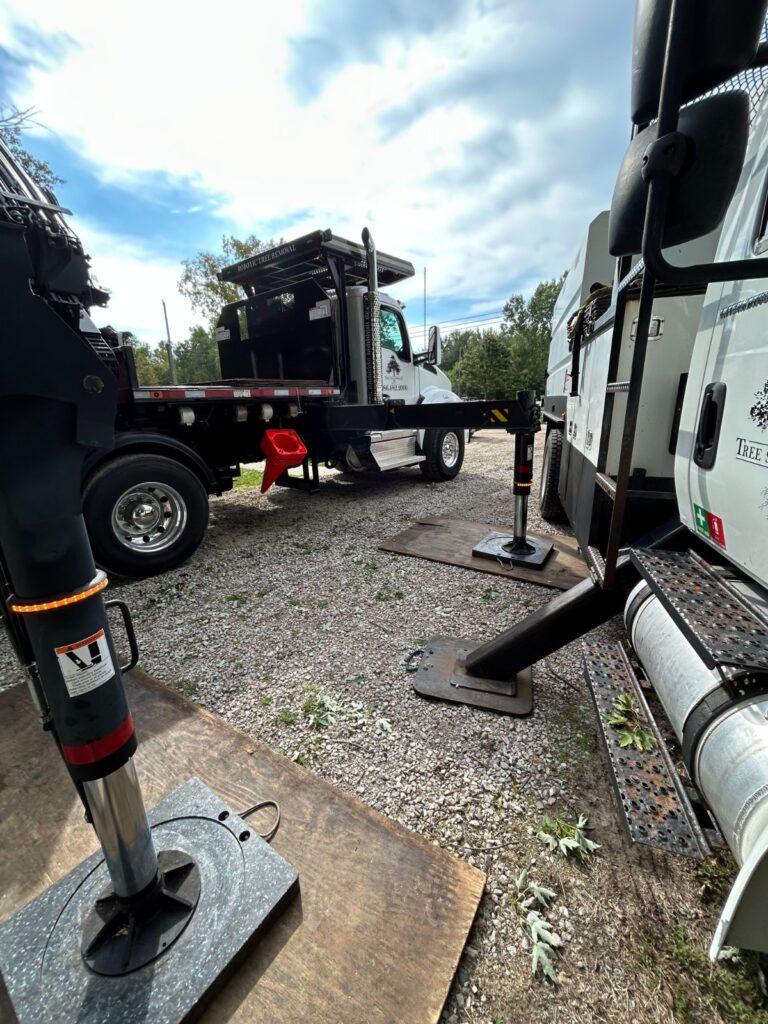
This means a professional tree removal plan should consider not only how the tree will come down, but also how the work will be performed around the septic system.
At Tree Solutions LLC, the tree and the surrounding property can be assessed before removal work begins. The goal is to control the removal process while minimizing unnecessary disturbance to the septic area.
Don’t Wait for a Septic Failure to Address the Tree
One of the biggest mistakes homeowners can make is waiting for obvious septic failure before dealing with a tree that has been growing too close to the system for years.
Michigan EGLE recommends preventing root growth into septic systems rather than waiting until roots have already become established inside them.
If you know that a mature tree is growing directly over your drainfield or immediately beside septic infrastructure, it is worth having the situation assessed.
Early action doesn’t necessarily mean removing the tree. It means finding out whether the tree presents a meaningful risk while there are still options available.
How to Prevent Future Problems
The best time to think about tree roots and septic systems is before planting.
If you’re adding trees to your property, first identify the location of the septic tank and drainfield. Choose planting locations that provide enough room for the tree’s mature root system.
Michigan EGLE recommends keeping trees and large shrubs away from septic systems and maintaining enough separation so that the mature tree’s dripline falls outside the drainfield.
The EPA similarly recommends appropriate spacing and favors grass and shallow-rooted vegetation over drainfields instead of trees and shrubs.
For existing trees, regular septic inspections and professional tree assessments can help identify potential problems before they become emergencies.
When Tree Solutions LLC Should Get Involved
If you’re dealing with a mature tree near your septic system, you don’t have to guess whether it needs to come down.
Tree Solutions LLC can evaluate the tree’s size, species, condition, location, and potential risk and help determine whether professional trimming or tree removal is appropriate.
This is particularly important when the tree is:
- Growing directly over a drainfield
- Close to septic pipes or the tank
- A large species with extensive roots
- Showing significant decay or decline
- Leaning toward a structure
- Damaged after a storm
- Located in an area where removal equipment must be carefully positioned
If removal is necessary, professional planning helps reduce the chance of turning a tree problem into a septic-system problem.
Final Thoughts
A tree near a septic system isn’t automatically a tree that needs to be removed. But location matters. Ignoring the risk of root intrusion can cause problems. These issues can cost much more to fix later.
Michigan EGLE identifies root infiltration as a leading cause of septic-system failure and recommends keeping trees appropriately separated from septic systems. The EPA likewise advises homeowners to keep trees away from drainfields because roots can damage and clog drainfield pipes.
If you have a mature tree growing close to your septic tank or drainfield, the right question isn’t simply, “Should I cut it down?”
It’s “Does this tree present a realistic risk to my septic system or property, and what is the safest way to address it?”
Tree Solutions LLC can assess the tree and help determine the appropriate next step. Whether the right solution is professional trimming, monitoring, or tree removal, acting early can help. It can protect your home, septic system, and property from a much larger problem.